Asteroseismology
in the
Era of PLATO
CEA Paris-Saclay;
June 30, 2025
How do we know anything?
physics of stellar interiors
quantitative
astronomy & astrophysics
Asteroseismology is our
only direct probe of
stellar interiors
(in the electromagnetic spectrum)
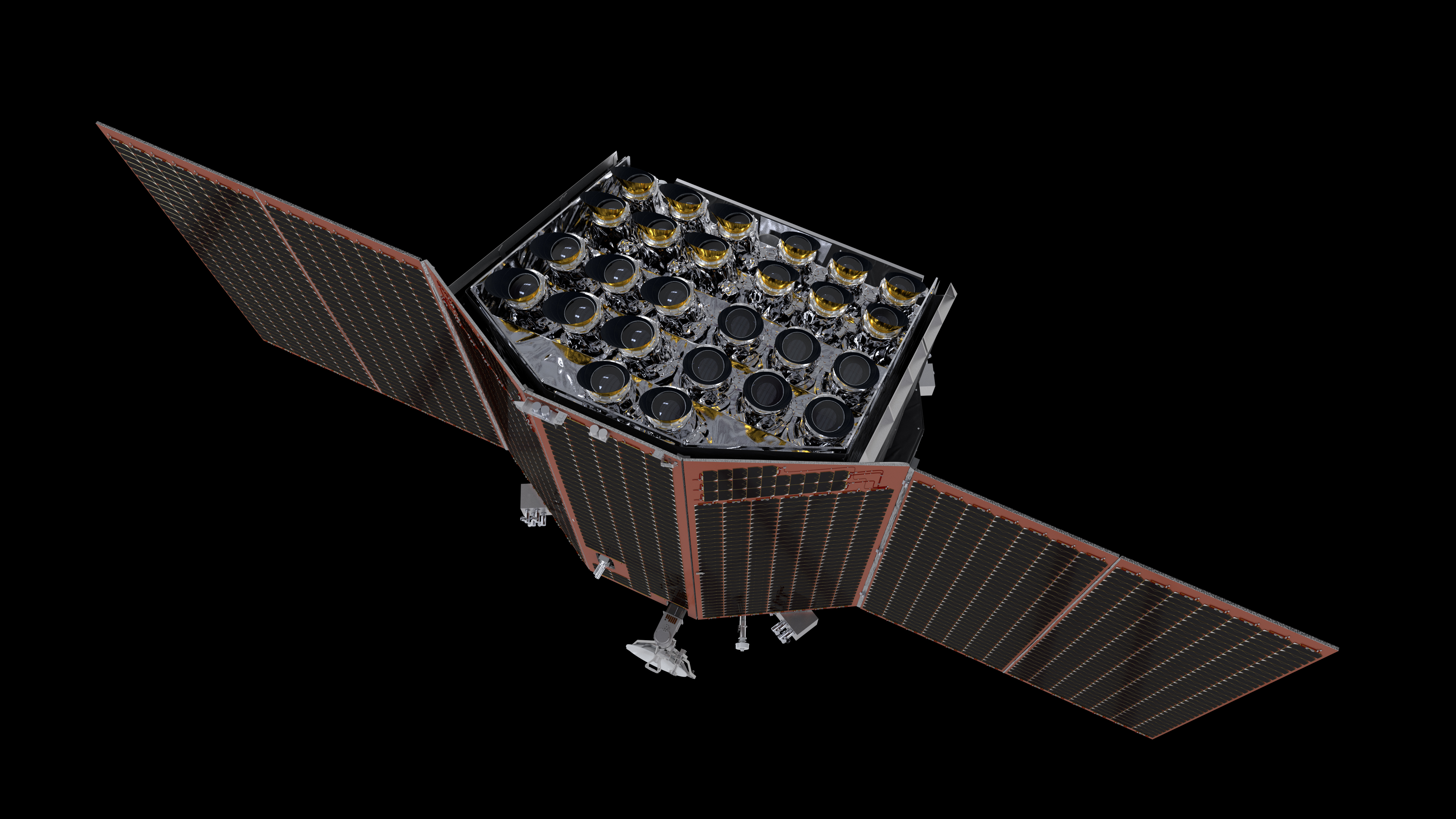
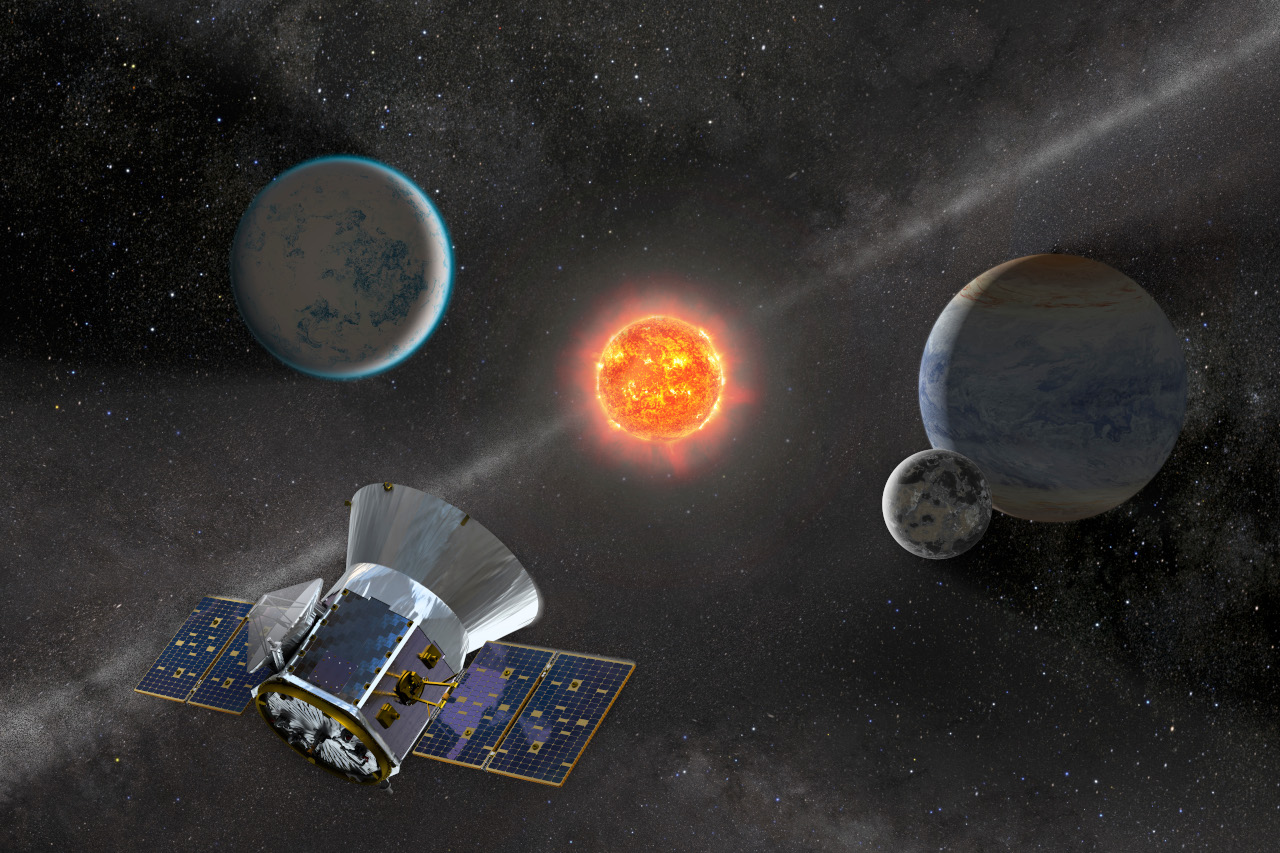
PLATO: Launch December 2026
The PLATO Sample
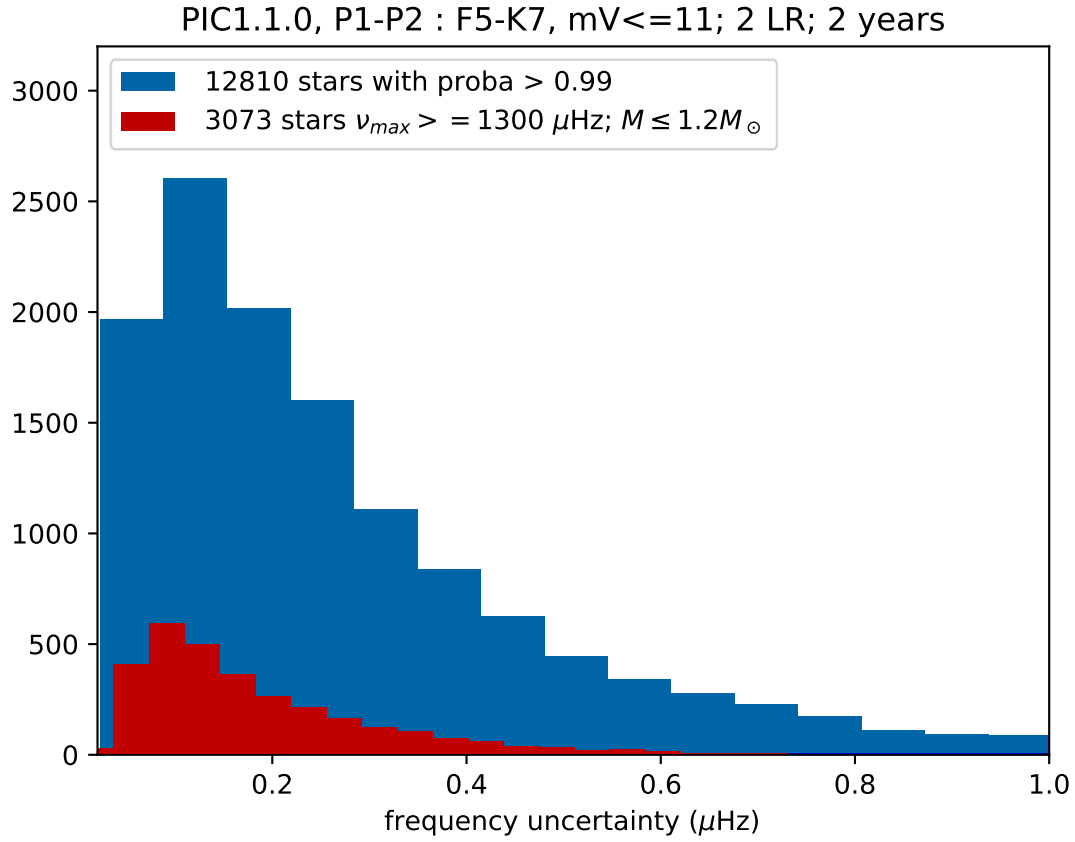
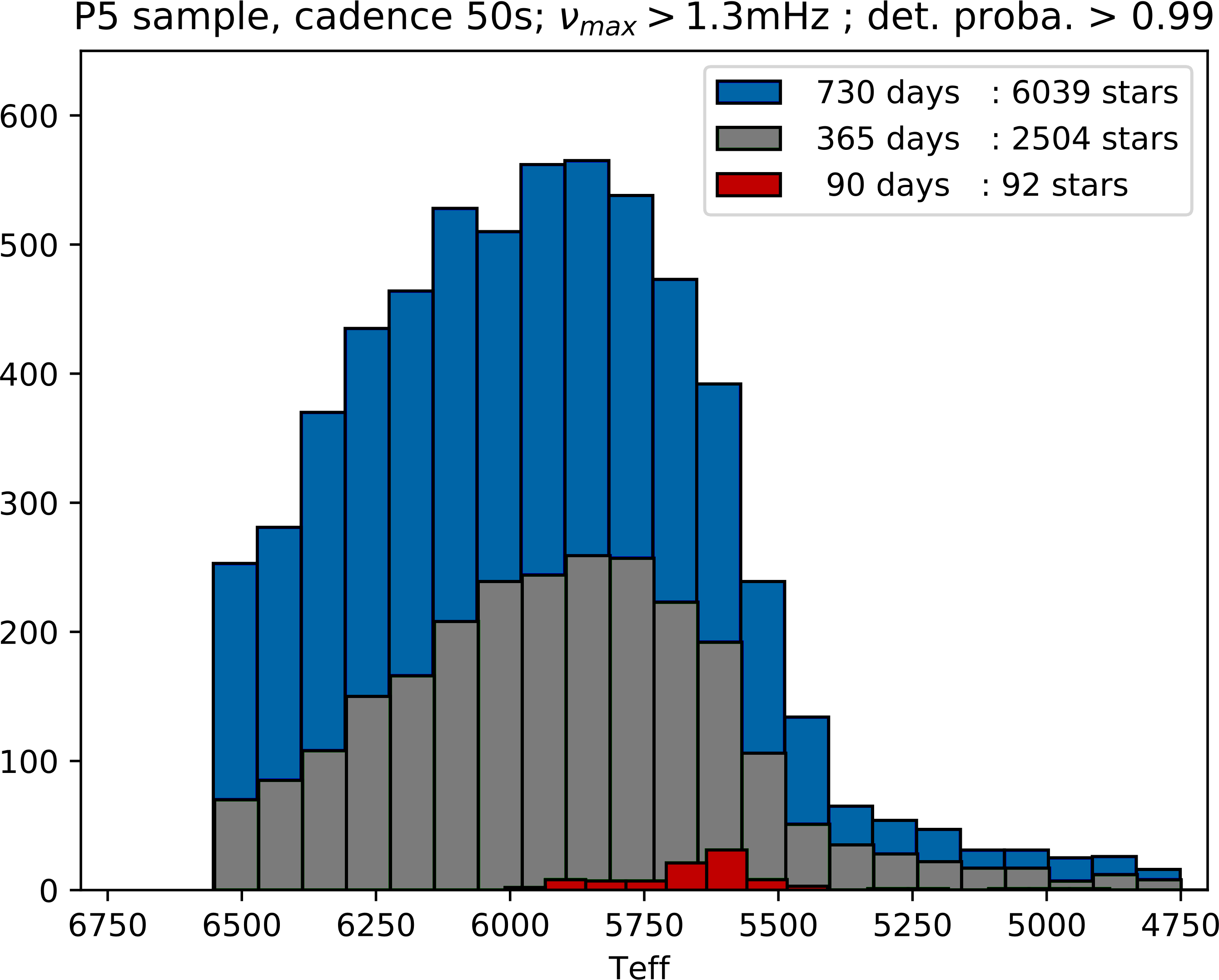
“Bright” sample:
16.000 FGK dwarfs
(\(V < 11\))
“Statistical” sample:
245.000 FGK stars
(dwarfs and subgiants)
(Entire existing sample not visible on this diagram)
More Data = More Problems
big data deluge
physical interpretation
analytic theory
computational technique
statistical methodology
I am a methodologist.
My work sits at the interface
between analytic theory and
observational data analysis.
As such, I uniquely possess
expertise in both.








Blackman, Ong, Fischer 2019 Petersburg, Ong, et al. 2020 Li, Huber, Ong, et al. 2025 Ong: California Planet Search
Ong+ 2022;
Ong & Gehan 2023; Ong 2024;
Rui†, Ong, Mathis 2024;
Hatt†, Ong, et al. 2024…
Lindsay†,
Hon, Ong et al.
2025; 3+ coauthor
publications
Hey, Li, Ong 2025
Ong et al. 2024a;
Ong 2025;
\(15+\) coauthor
publications
Ong
et al. 2021;
Reyes†, Stello, Ong,
et al., Nature, 2025
Ong et
al. 2024b;
Nielsen, Ong et al. 2025
+3 coauthor publications
†: mentoree coauthor
Ong:
PLATO WP 120, 128;
PLATO CS WP 162
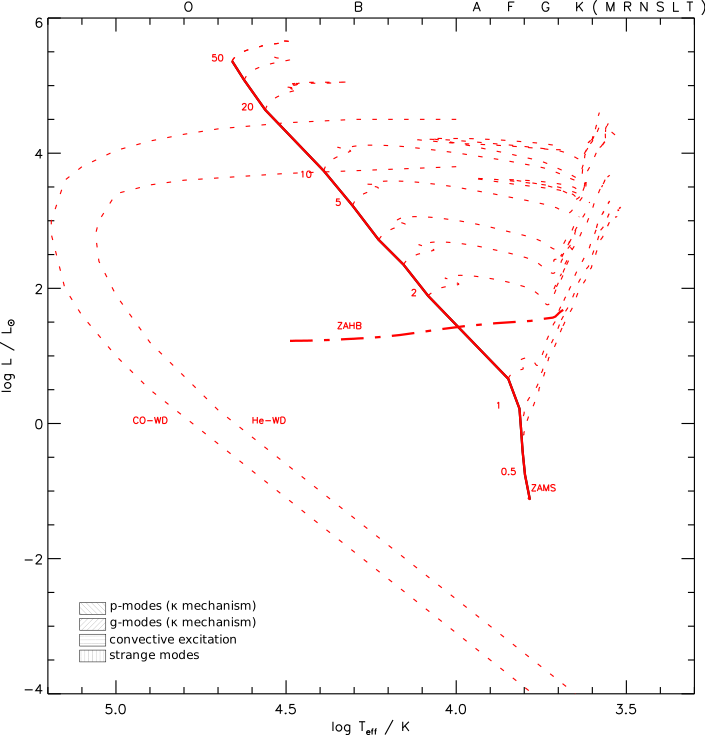
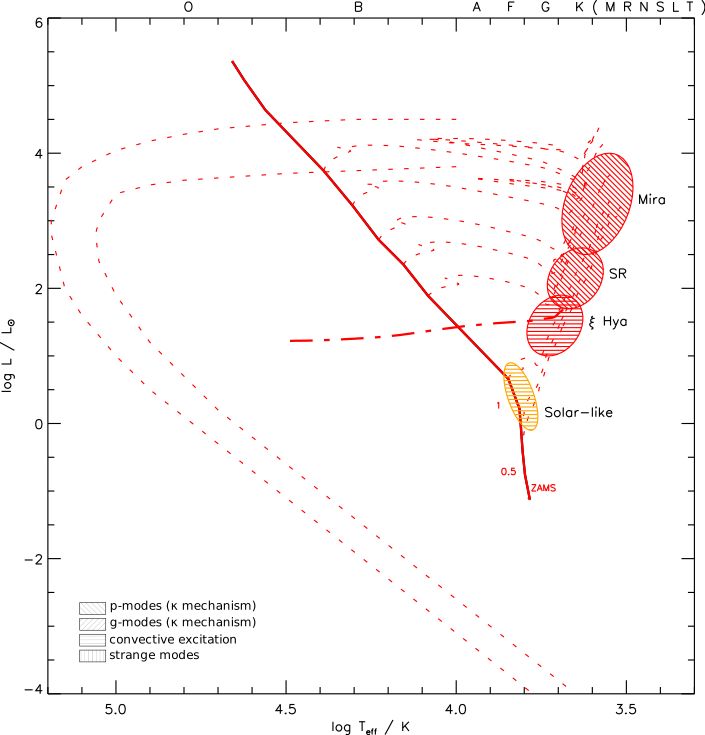
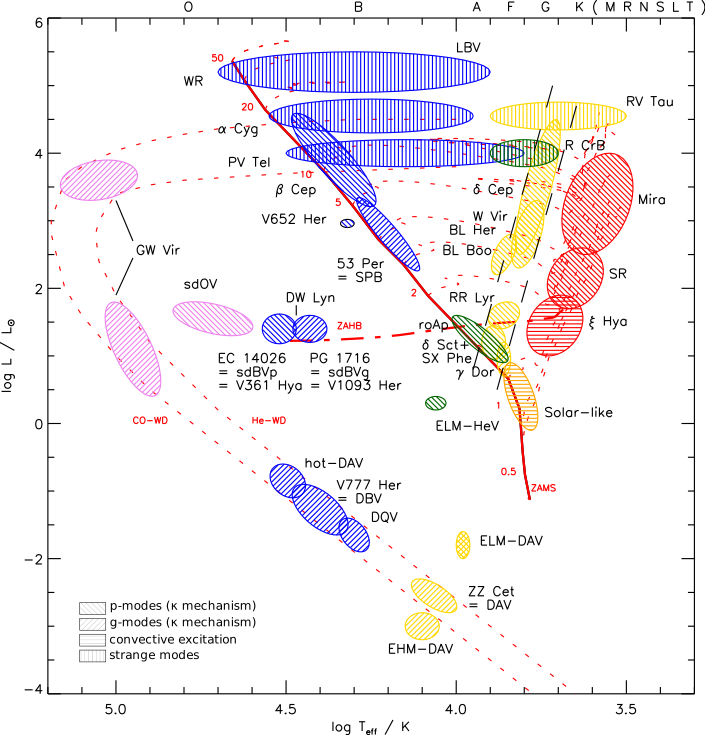
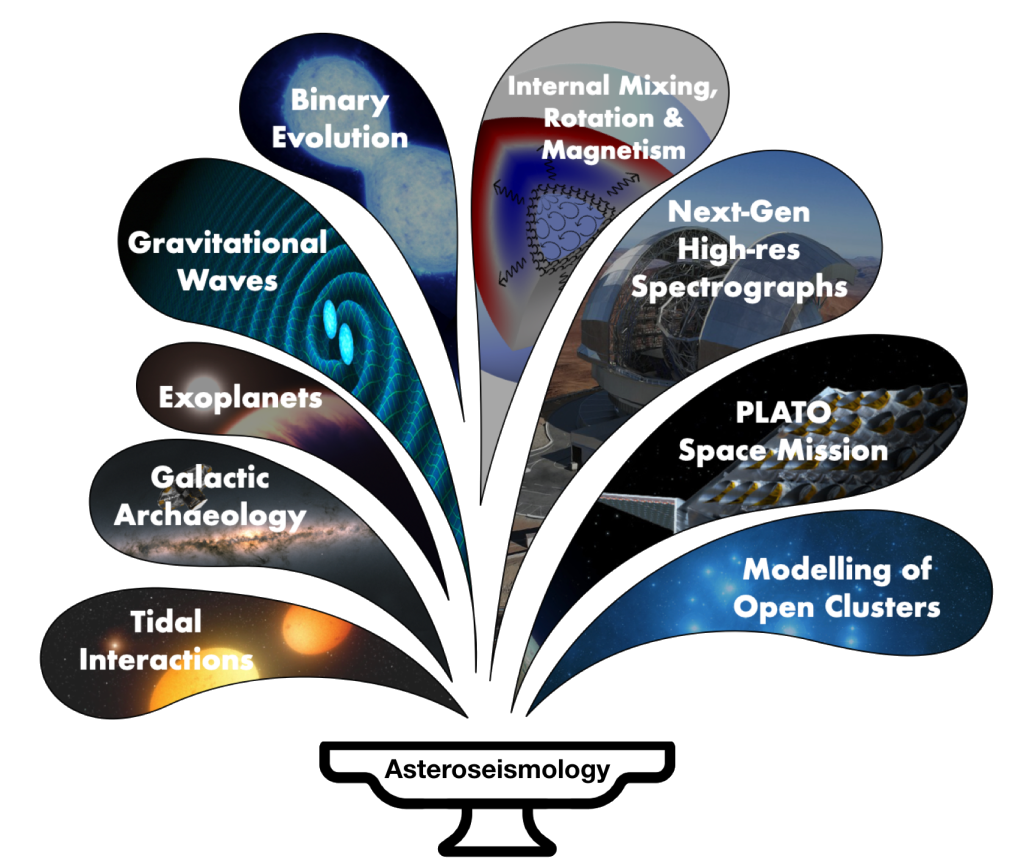
Asteroseismology is rich:
each of these patches is
a different class of variable star!
The PLATO main mission
focuses specifically on
cool dwarfs and subgiants.
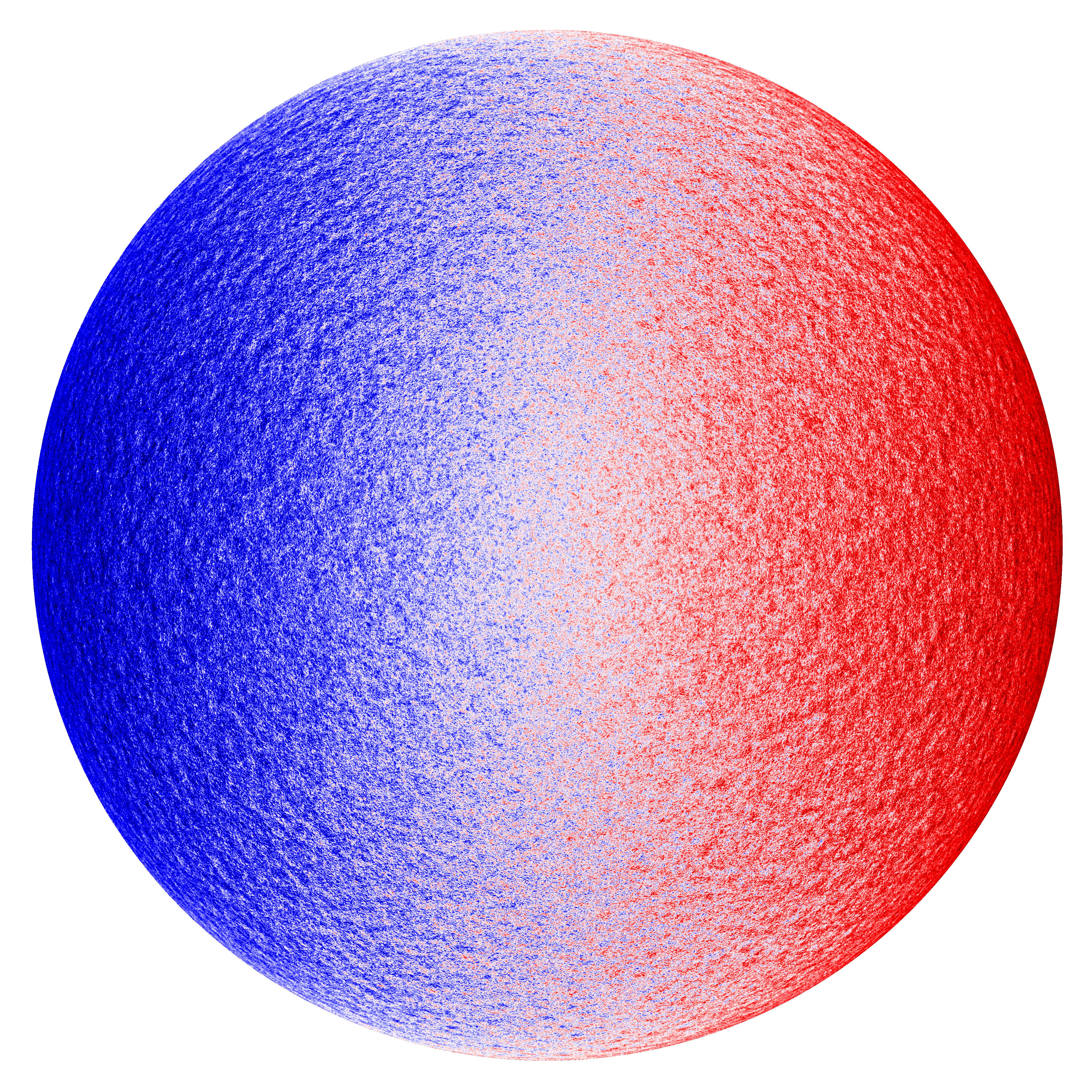
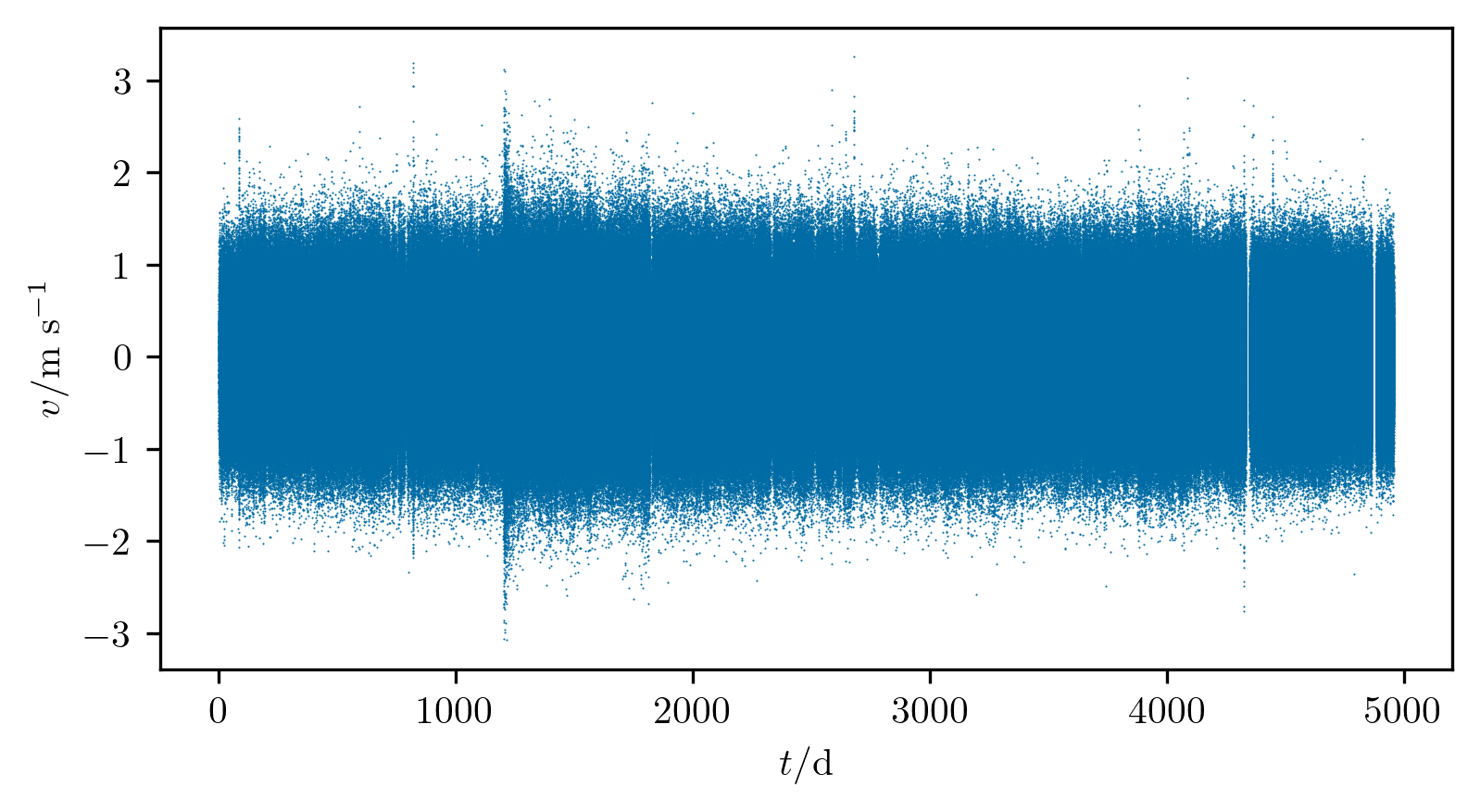
\(\ell = 0\) MDI Doppler velocities
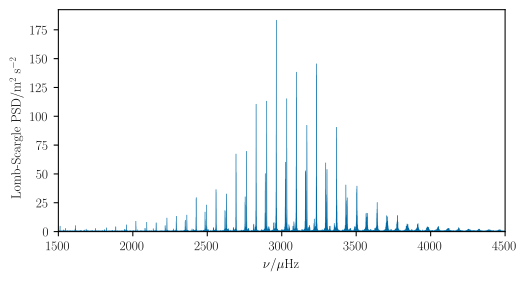
Power spectra of MDI dopplergrams
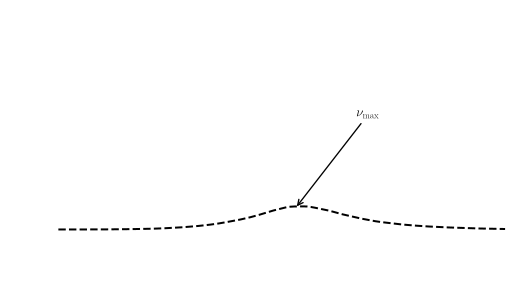
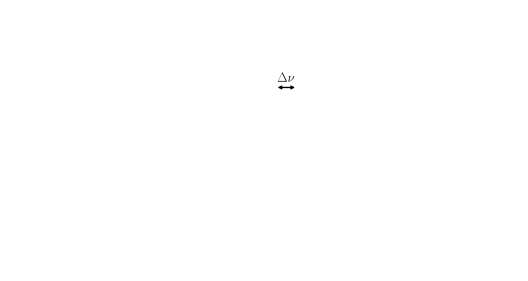
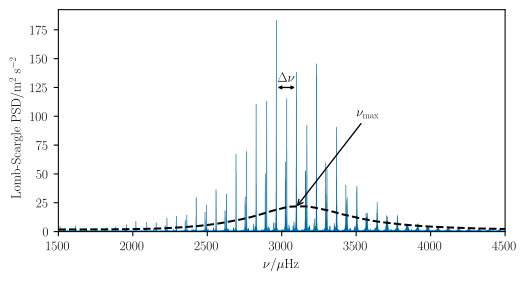
\[ \begin{aligned} {\Delta\nu_\odot} &\sim 135\ \mathrm{\mu Hz} \\ {\nu_{\text{max},\odot}} &\sim 3090\ \mathrm{\mu Hz} \end{aligned} \]
(roughly 5-minute oscillations)
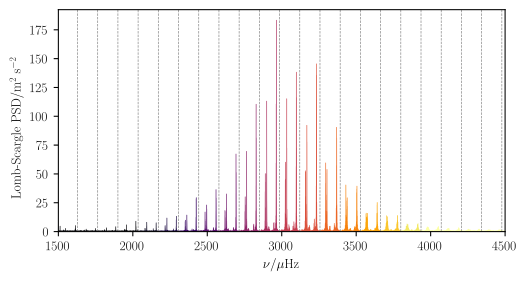
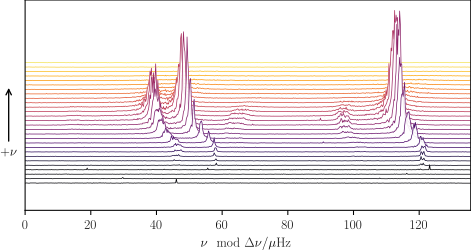
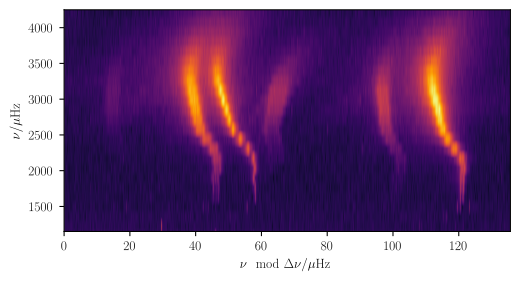
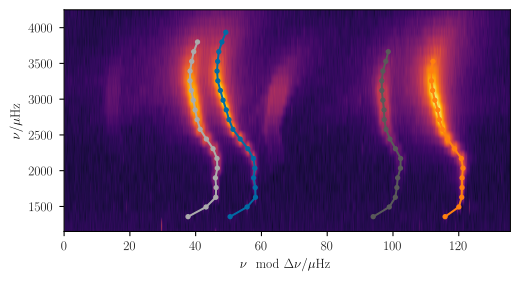
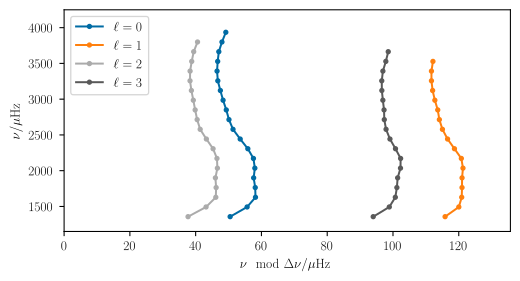
p-mode frequencies satisfy \(\nu_{n\ell} \sim \Delta\nu\left(n + {\ell \over 2} + \epsilon_\ell(\nu)\right) + \mathcal{O}(1/\nu)\)
Stochastic,
broad-band
excitation
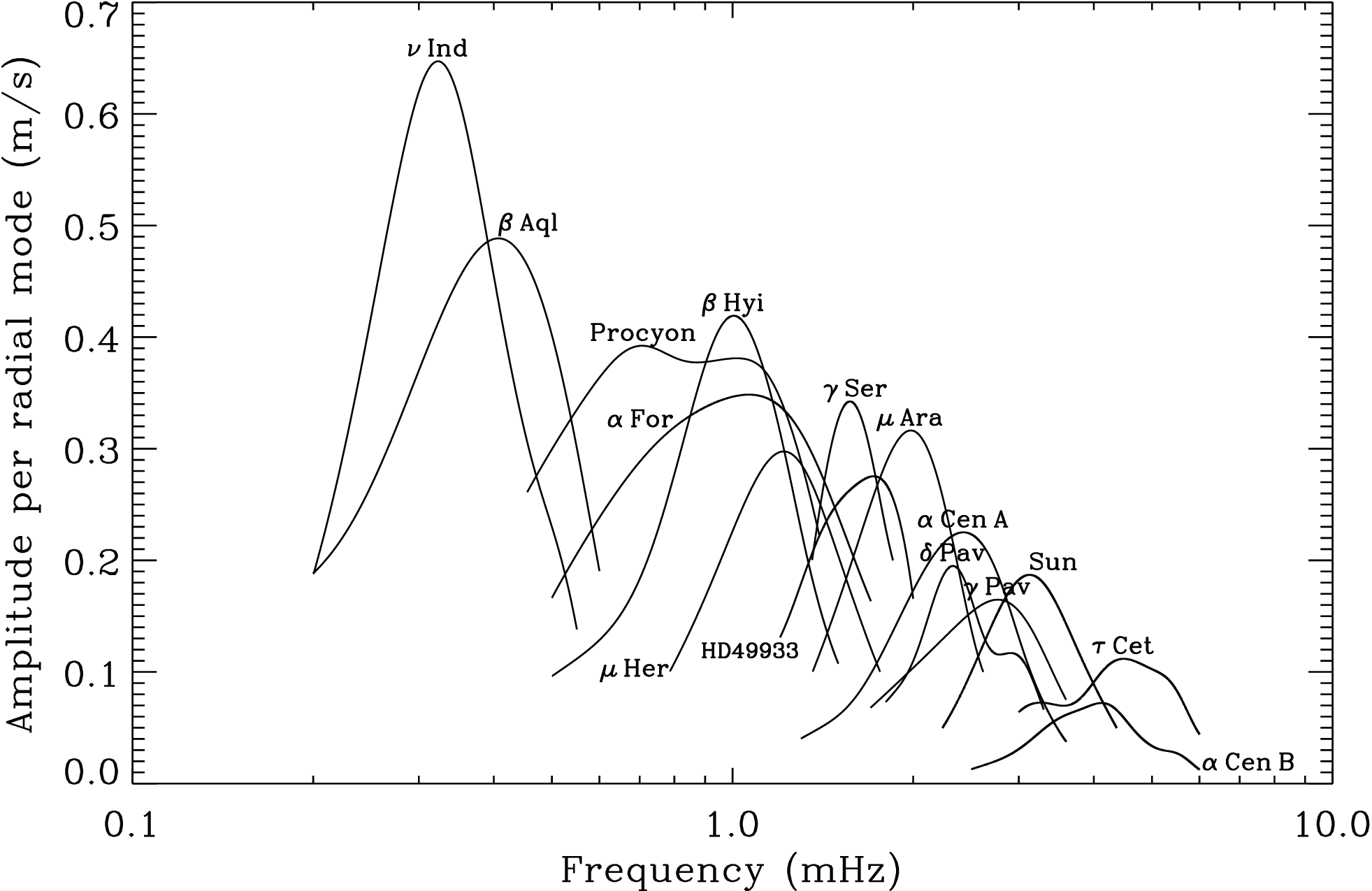
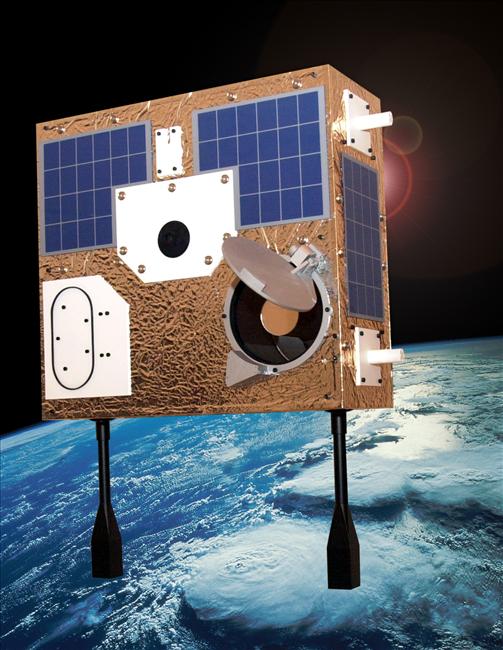
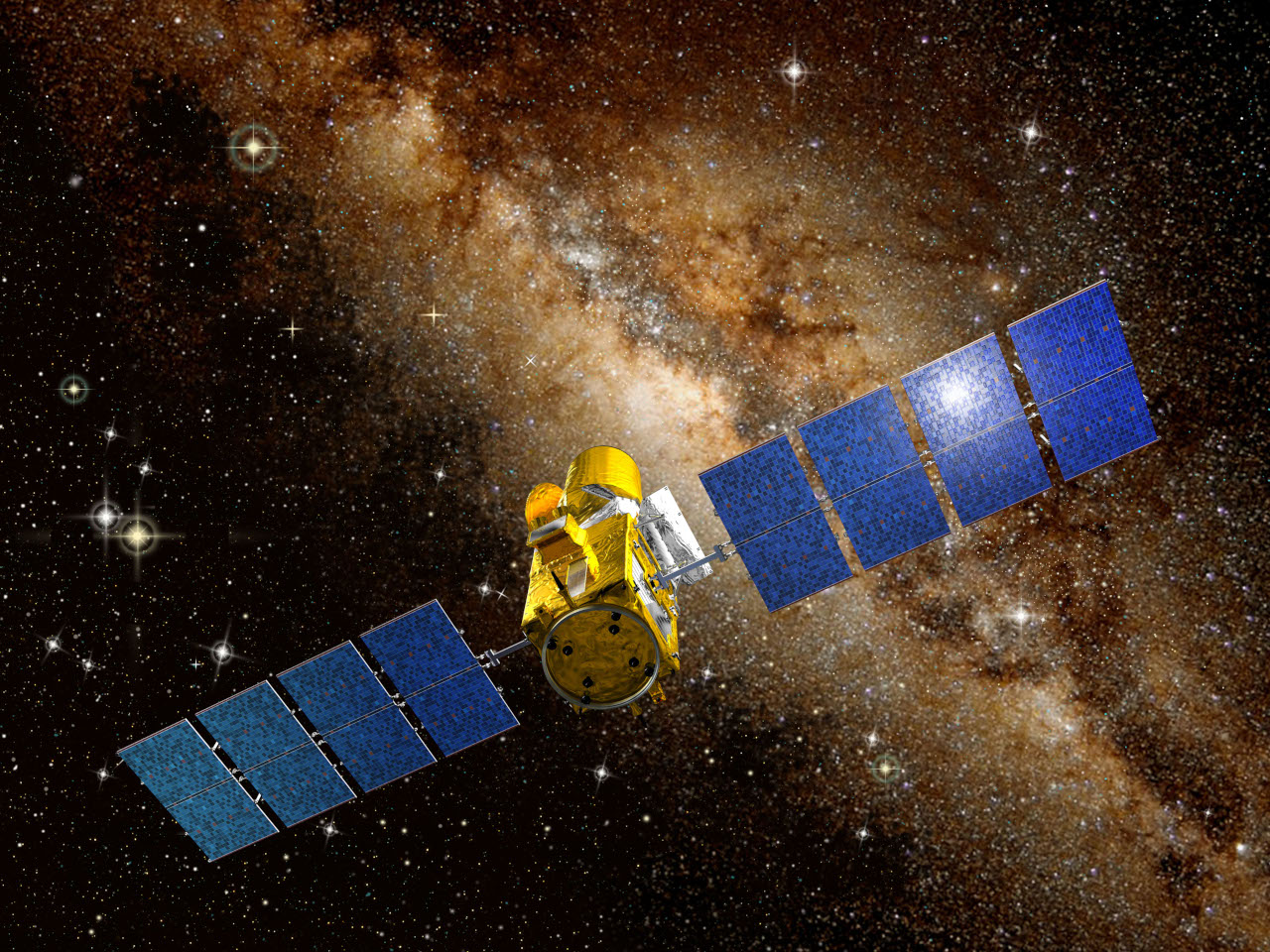
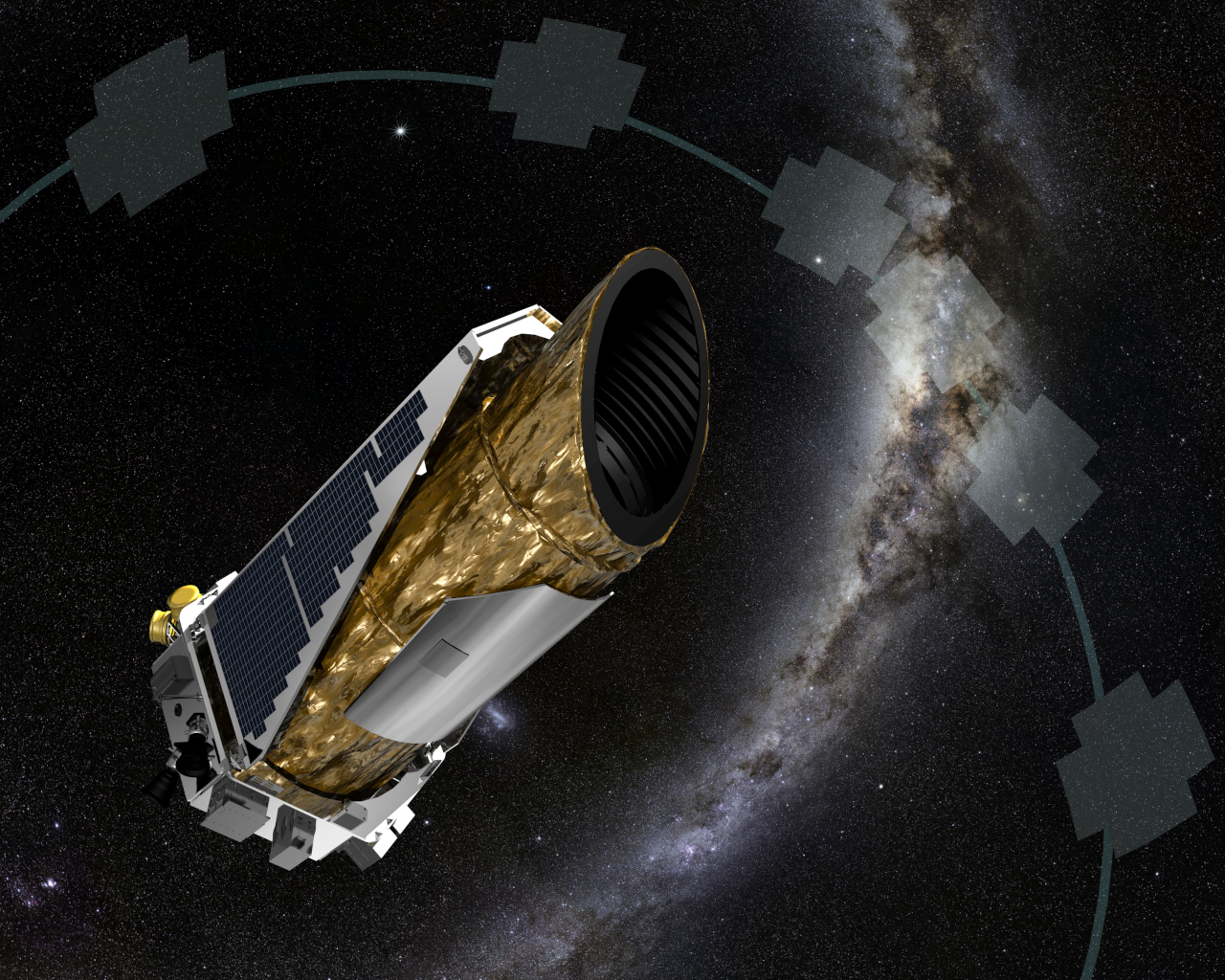
Asteroseismology went from tens of stars…
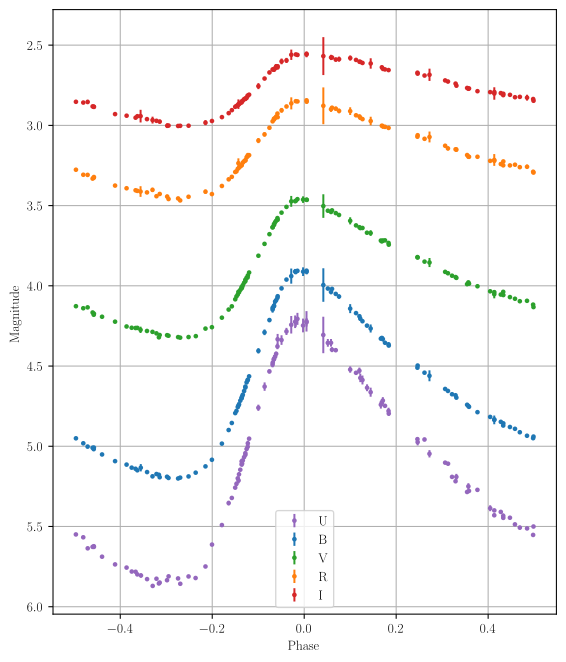
\[\Huge P \sim L^\alpha\]
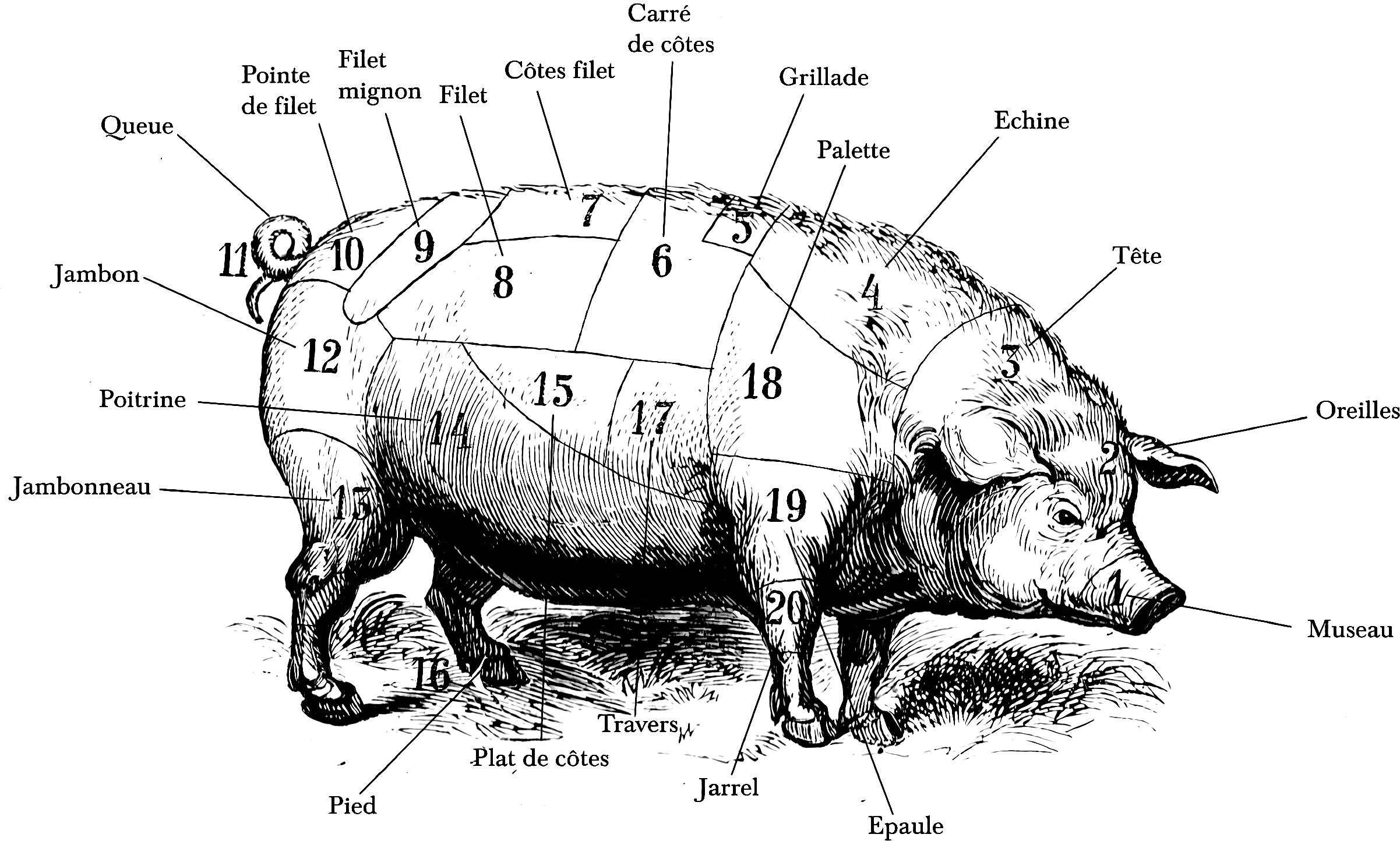
Asteroseismology du-museau-à-la-queue
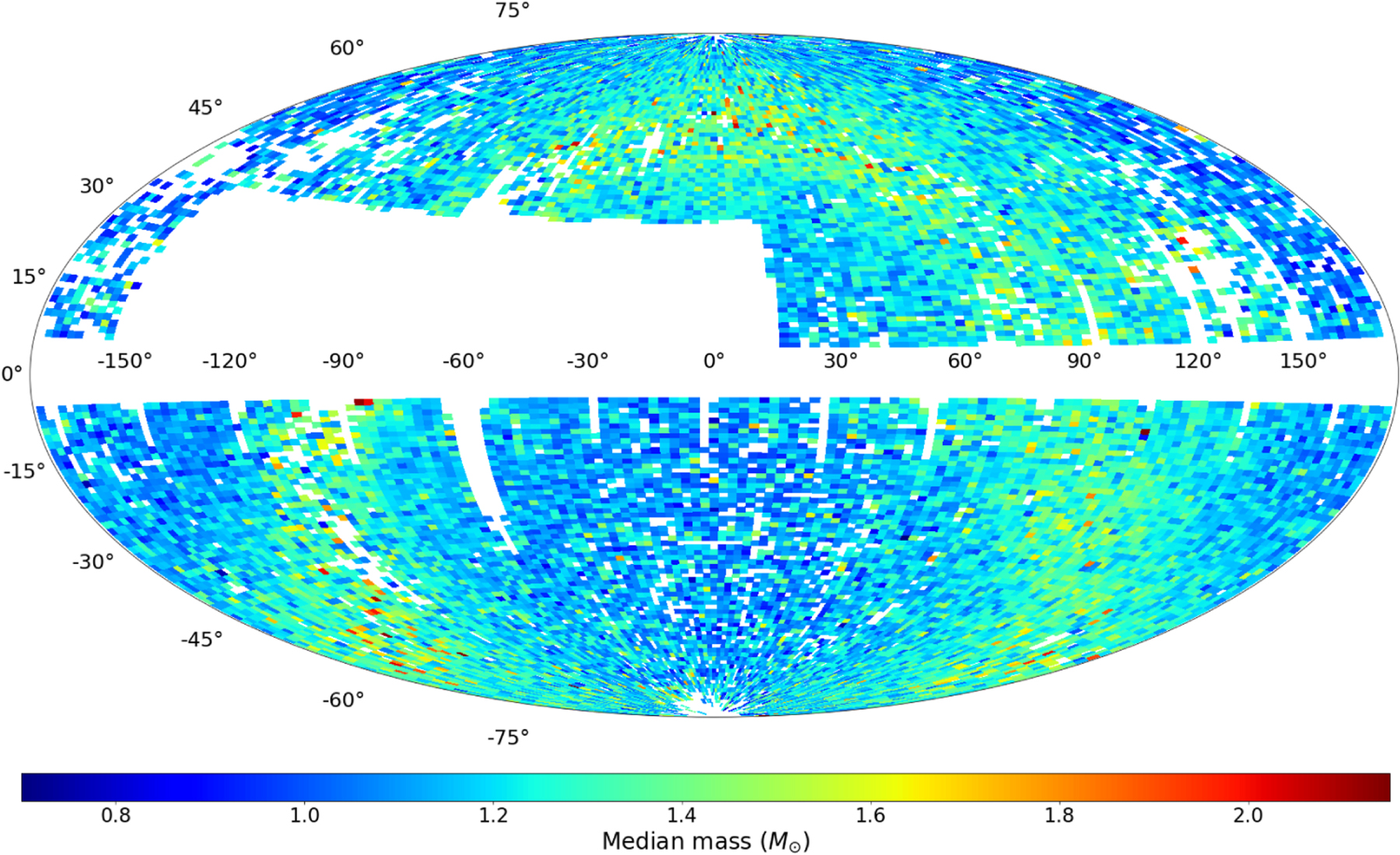
Modelling with Seismology gives Precision and Ages
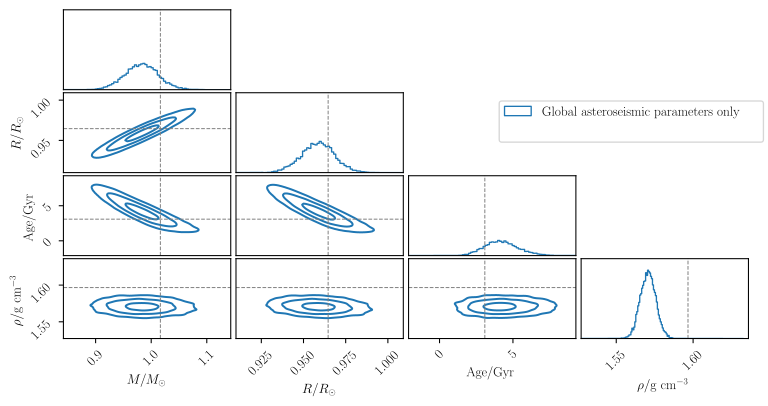
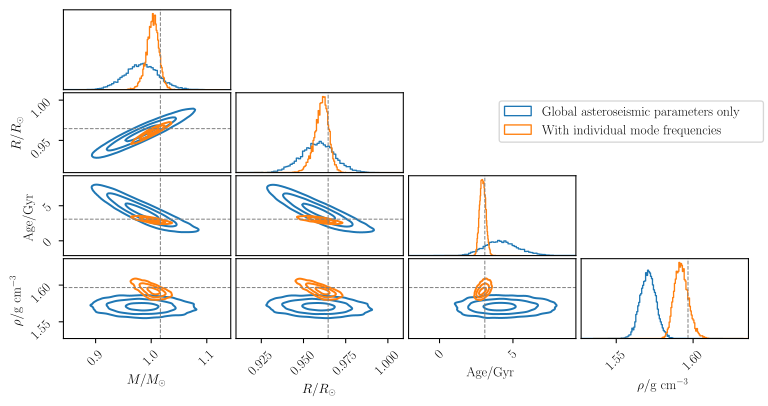
Hare “Zebedee”, Cunha+ incl. Ong (2021);
HPC & pipeline: Ong+ 2021a


Using \(\Delta\nu\) and \(\nu_\mathrm{max}\) only
Precise measurements of field stars: \[ {\sigma_R \over R} \lesssim 2 \%;\ {\sigma_M \over M} \lesssim 5 \%;\ \sigma_\text{Age} \lesssim 0.4\ \mathrm{Gyr} \]
PLATO DP5:
Masses, Radii, Ages
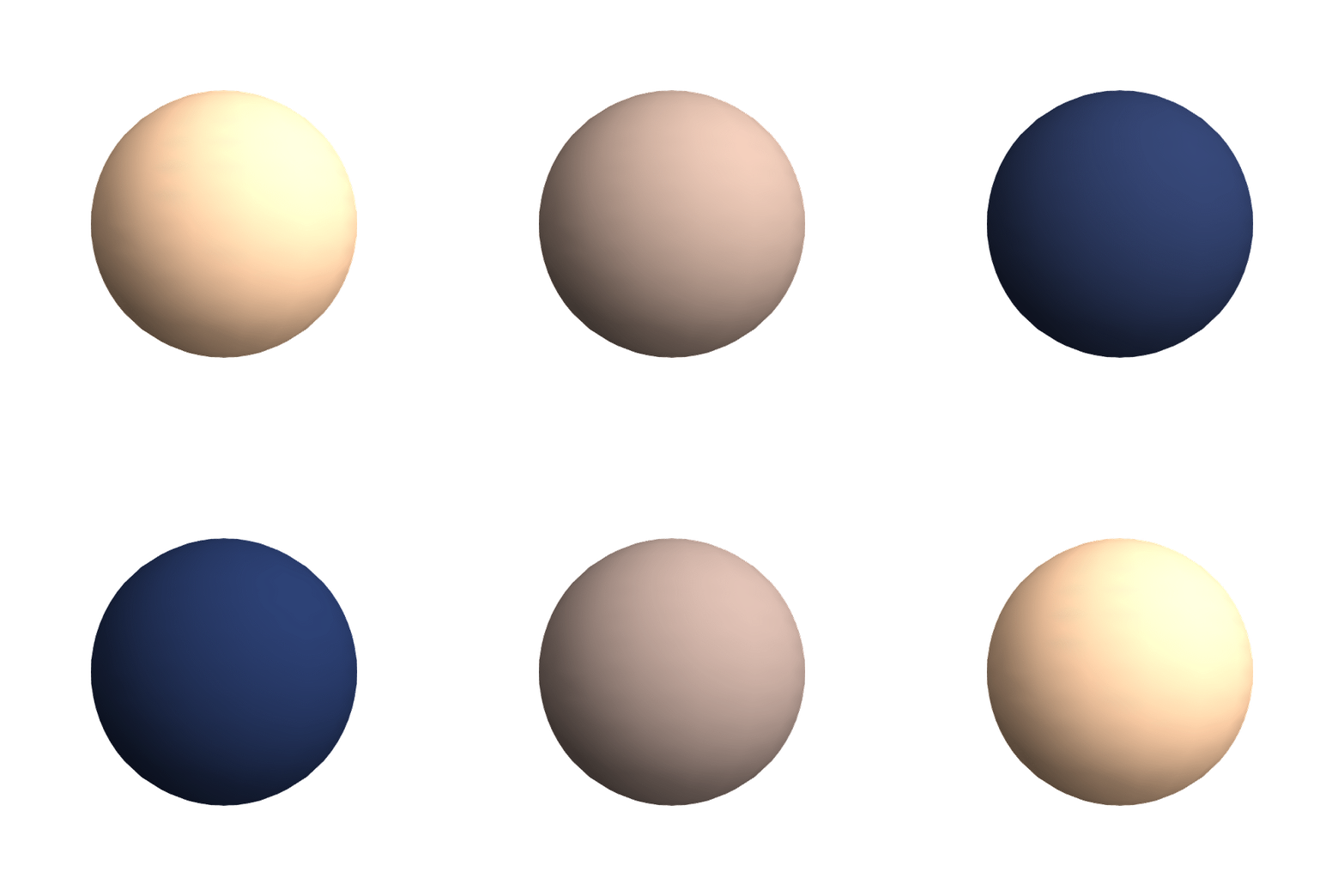


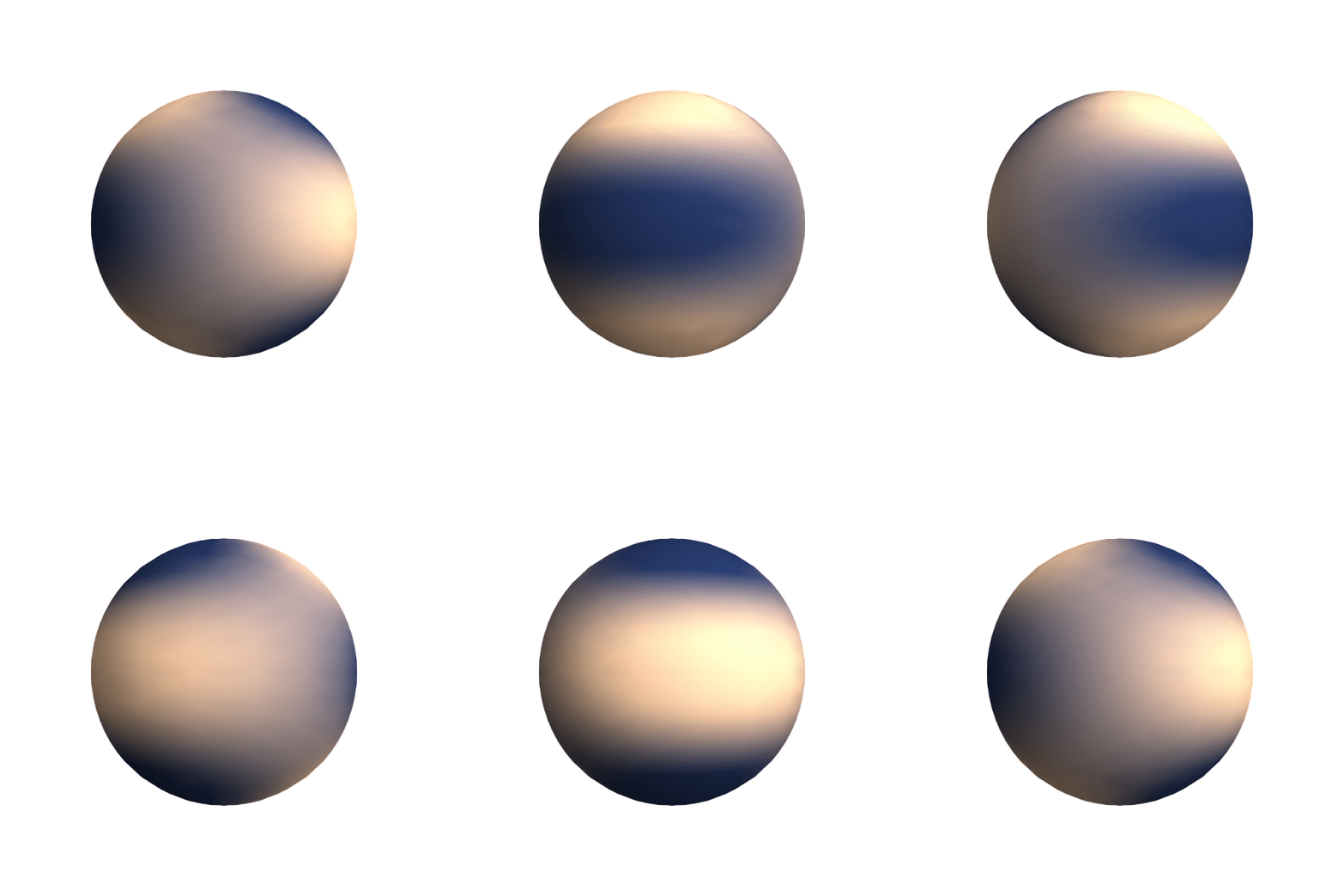
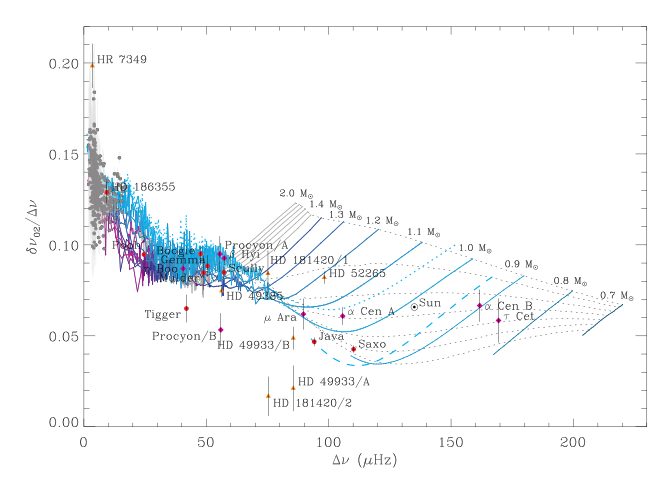
from White+ (2011)
Dashed lines = isochrones,
spaced by 1 Gyr
(n.b. typical Kepler uncertainty of \(<1\ \mu\)Hz)
Main-sequence ages (\(\Delta\nu \gtrsim 50\
\mu\)Hz)
can be read off \(r_{02}\) diagrams
directly.
Many Mode Frequencies constrain Structure
In particular, Asteroseismology…
has led to the discovery of new avenues of research in our understanding of stellar interiors across the whole HR diagram. —astronet Roadmap
2022-2035
(e.g. Bellinger+ 2017,2019;Ong & Basu
2019a,b;
Lindsay, Ong, Basu 2022†, 2023†,
2024†;
Vanlaer+ 2023; Ong+ in prep†)
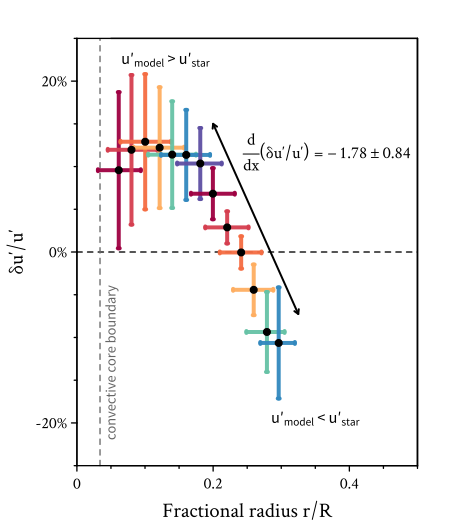
†: mentoree paper
Bellinger+ 2019
Relative difference in isothermal sound speed
Case Study: Post-Main-Sequence Pulsations
Evolved stars dominate any asteroseismic sample, because \[\large V_\text{osc} \sim L/M\]
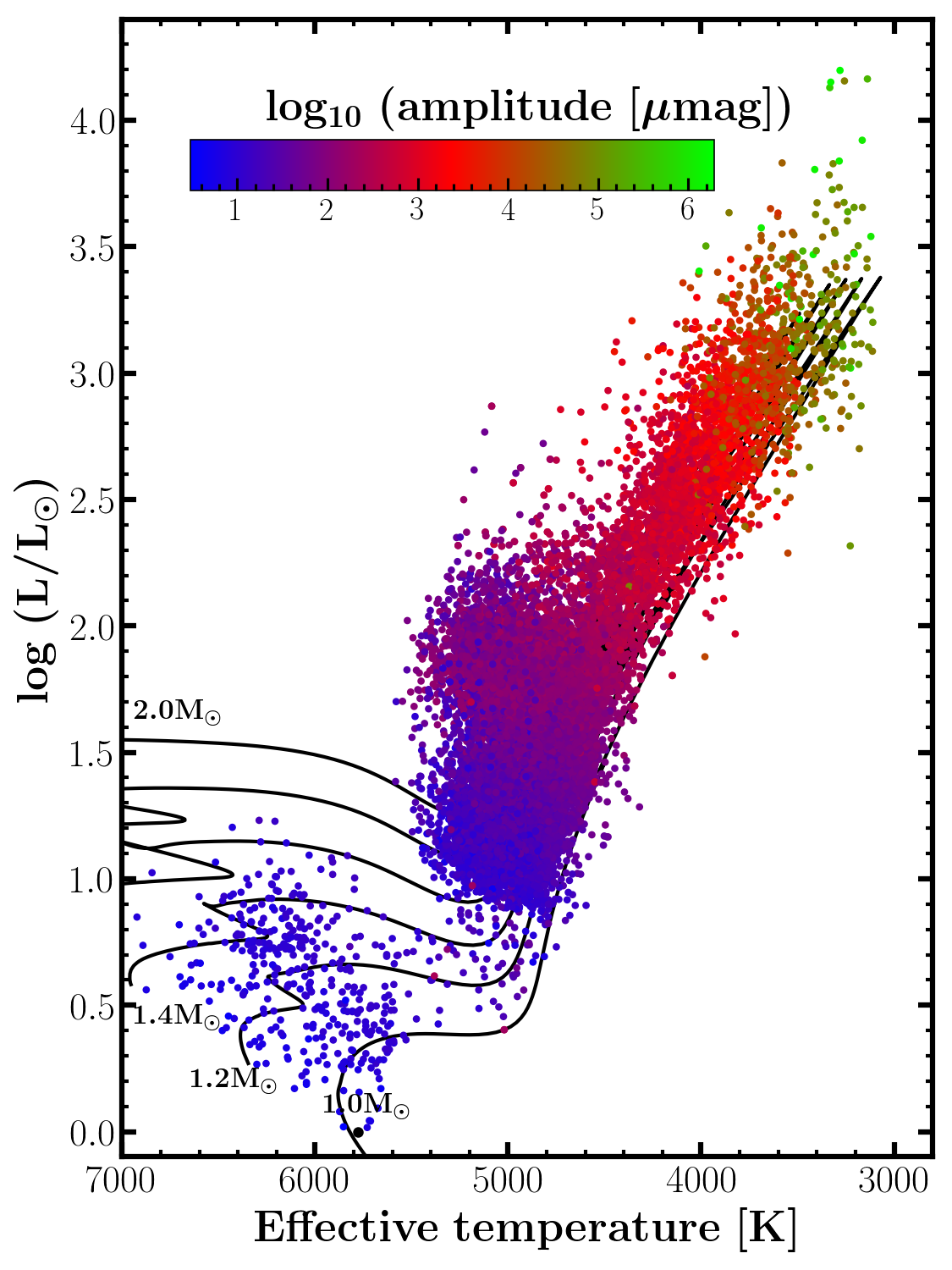
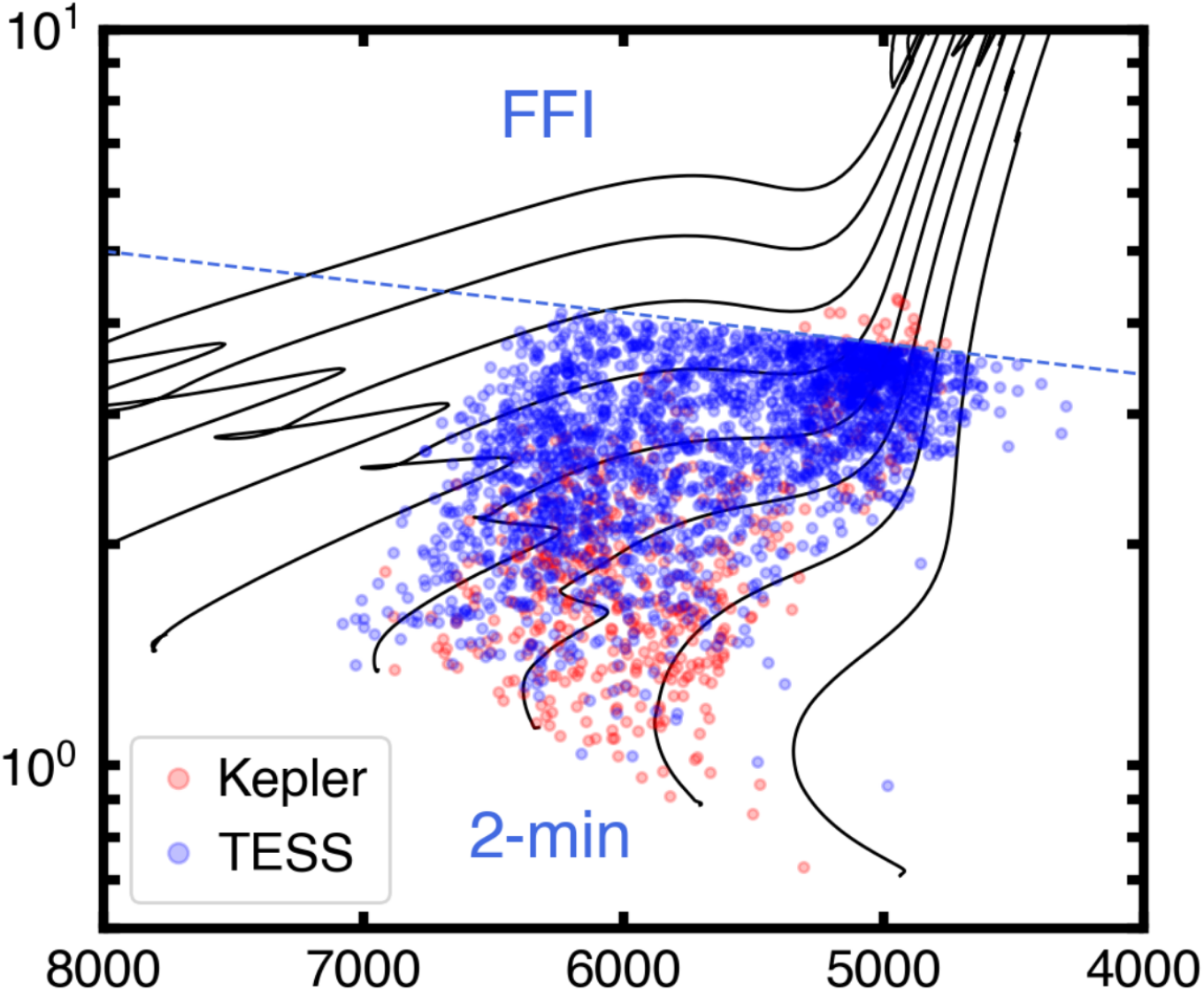
\(T_\text{eff}/\mathrm{K}\)
\(R/R_\odot\)

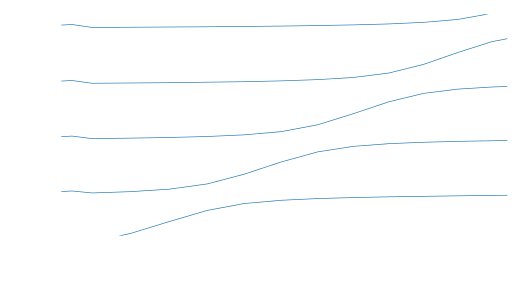
(proxy for age \(\to\))
Mixed modes exhibit
avoided crossings
between underlying p- and
g-modes.
(adapted from Ong & Basu 2020)
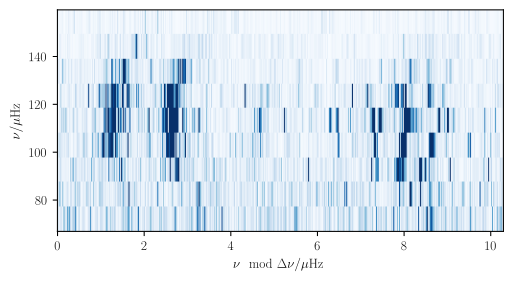
Unresolvable from the ground — but visible from space!
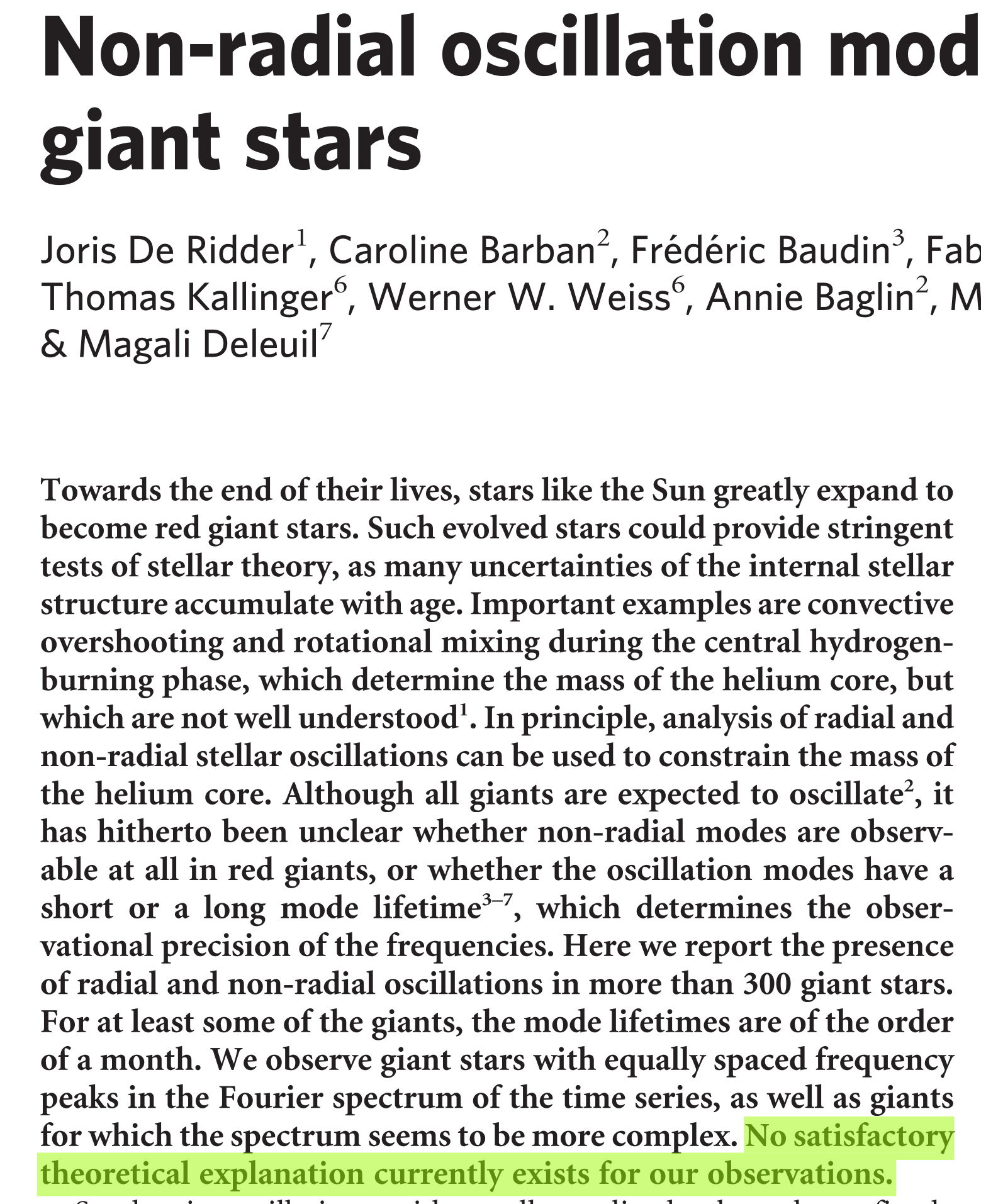
Hypothesis
(Unno+ 1989)
Data Set
(CoRoT: 2009)
Analysis
(de Ridder et al. 2009)
Interpretation
(Dupret et al. 2009)
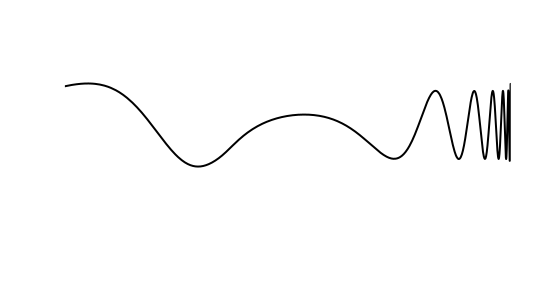
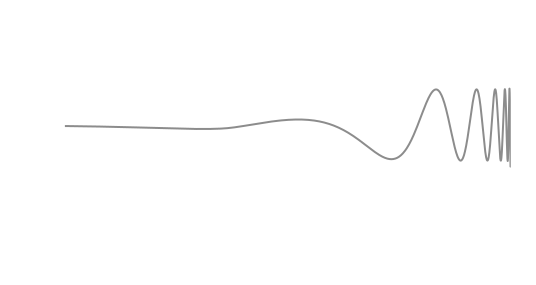
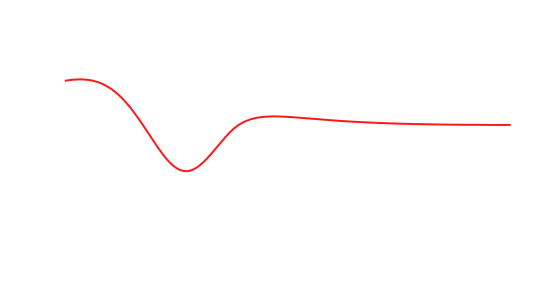
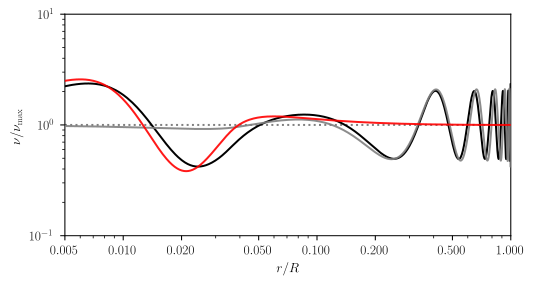
Mixed modes propagate separately in the core
vs
in the envelope.
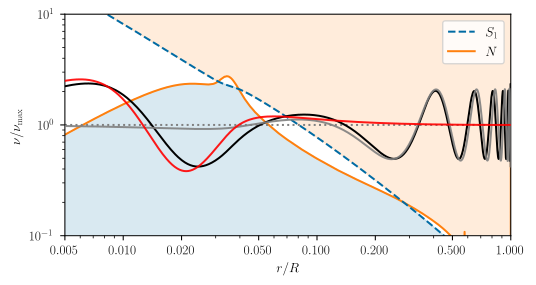
\[\Large \omega_-^2 \sim N^2 {k_h^2 \over |\mathbf{k}|^2}\]
\[{\color{red} \omega_g < N, S_\ell}\]
\[\Large \omega_+^2 \sim c_s^2 |\mathbf{k}|^2\]
\[{\color{gray} \omega_p > S_\ell, N}\]
\[\small\vec{\xi}_\text{mixed} \sim {\color{grey} \sum_i c_{\pi, i} \vec{\xi}_{\pi,i}} + {\color{red} \sum_j c_{\gamma, j} \vec{\xi}_{\gamma,j}}\]
?
(Ong & Basu 2020)
\[\small\vec{\xi}_\text{mixed} \sim {\color{grey} \sum_i c_{\pi, i} \vec{\xi}_{\pi,i}} + {\color{red} \sum_j c_{\gamma, j} \vec{\xi}_{\gamma,j}}\]
\[\iff\]
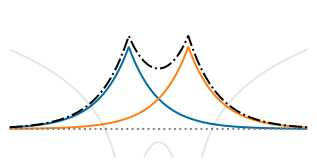
\[\small\psi_\text{mol} = {\color{blue}\sum_i c_{1,i} \psi_{1,i}} + {\color{darkorange}\sum_j c_{2,j} \psi_{2,j}}\]
State of the art for determining (sub)giant
structure and
properties (Ong+ 2021a, b, c), and
internal rotation
(Ong+ 2022, 2023; Ong 2024, 2025).
We know more about giant cores
than about the core of our own Sun!
Mixed Modes: Evolutionary Diagnostics
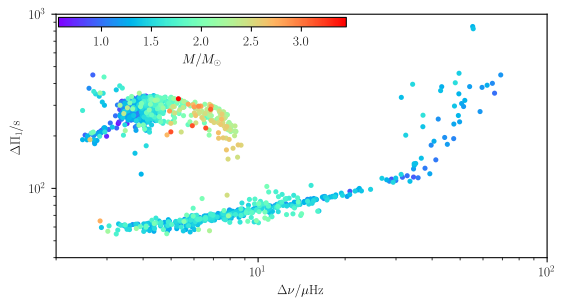
g-mode Period Spacing \(\Delta\Pi_1/\mathrm{s}\)
p-mode Frequency Spacing \(\Delta\nu/\mu\mathrm{Hz}\)
from Mosser+ (2014)
clump stars
first-ascent RGs
(Ong & Basu 2020)
\[\small\vec{\xi}_\text{mixed} \sim {\color{grey} \sum_i c_{\pi, i} \vec{\xi}_{\pi,i}} + {\color{red} \sum_j c_{\gamma, j} \vec{\xi}_{\gamma,j}}\]
\[\longrightarrow\]
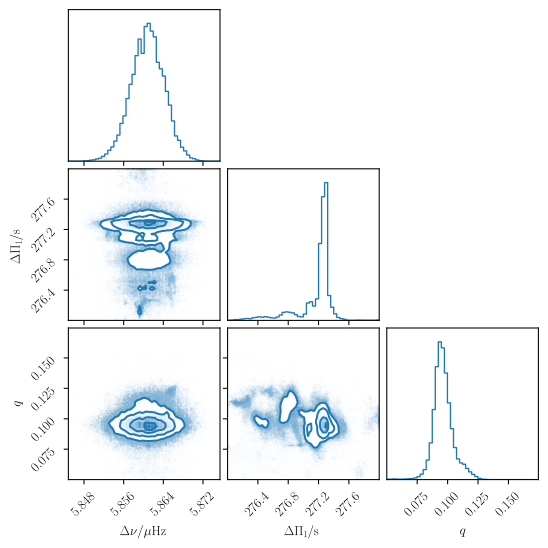
PBJam/reggae:
Nielsen, Ong et al. 2025; Ong et
al. 2024b
from Lindsay, Hon, Ong, et al. 2025
from White+ (2011)
Main-sequence ages (\(\Delta\nu \gtrsim 50\
\mu\)Hz)
can be read off JCD or \(r_{02}\)
diagrams directly.
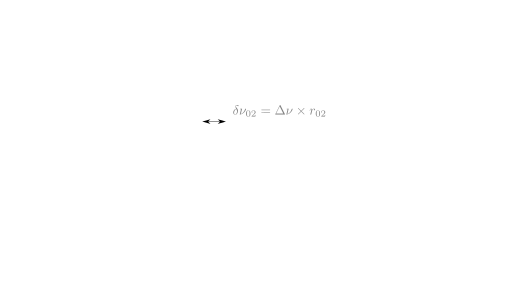
(\(r_{02} =
\delta\nu_{02}/\Delta\nu_1\))
What’s going on here?? (A: avoided crossings!)
(Ong & Basu 2020)
\[\small\vec{\xi}_\text{mixed} \sim {\color{grey} \sum_i c_{\pi, i} \vec{\xi}_{\pi,i}} + {\color{red} \sum_j c_{\gamma, j} \vec{\xi}_{\gamma,j}}\]
\[\longrightarrow\]
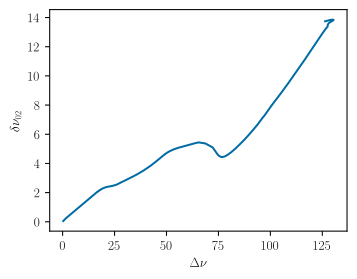
Fast numerical calculations of pure quadrupole p-modes,
and therefore \(\delta\nu_{02}\) or
\(r_{02}\), are now possible
in sub- and red giants.
(Ong et al. 2025)
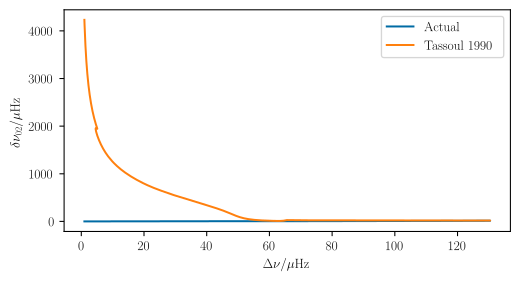
\[\text{Old theory: }\delta\nu_{02} \sim \int {1 \over r}{\mathrm d c_s\over \mathrm d r} \mathrm d r\]
?????
Catastrophe!
Observational Confirmation!
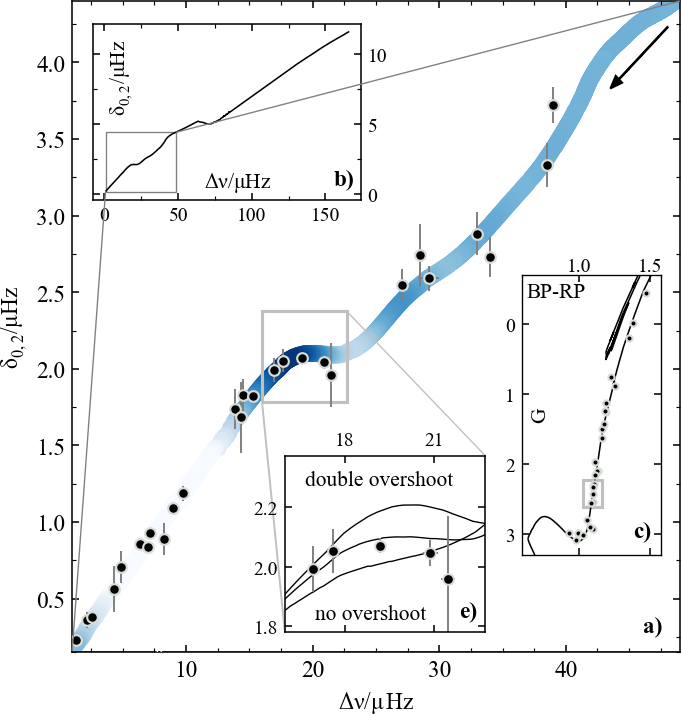
\(\delta\nu_{02}\) probes
mixing processes
near convective boundaries
(Ong, Lindsay†, Reyes†, et al. 2025)
Knee feature is
bourne out observationally by \(\delta\nu_{02}\) measurements of the open
cluster M67.
(Reyes†, Stello, Ong, et al. 2025, Nature)
†: mentoree paper authors
Theory
(Tassoul 1990)
Data Set
(Kepler/K2: 2013-2015)
New Theory
(Ong et al. 2025)
Analysis and
(Re)interpretation
(Reyes, Stello, Ong+ 2025)
g-modes: Core Magnetism
Li et al. Nat. 2022:
Asymmetric splittings probe
core magnetic fields
(Li+ 2023, Deheuvels+ 2023;
Rui, Ong, Mathis, 2024†;
Rui, Fuller, Ong 2025)
Population studies
of rotation vs. magnetism
(Hatt, Ong, et al., 2024†)
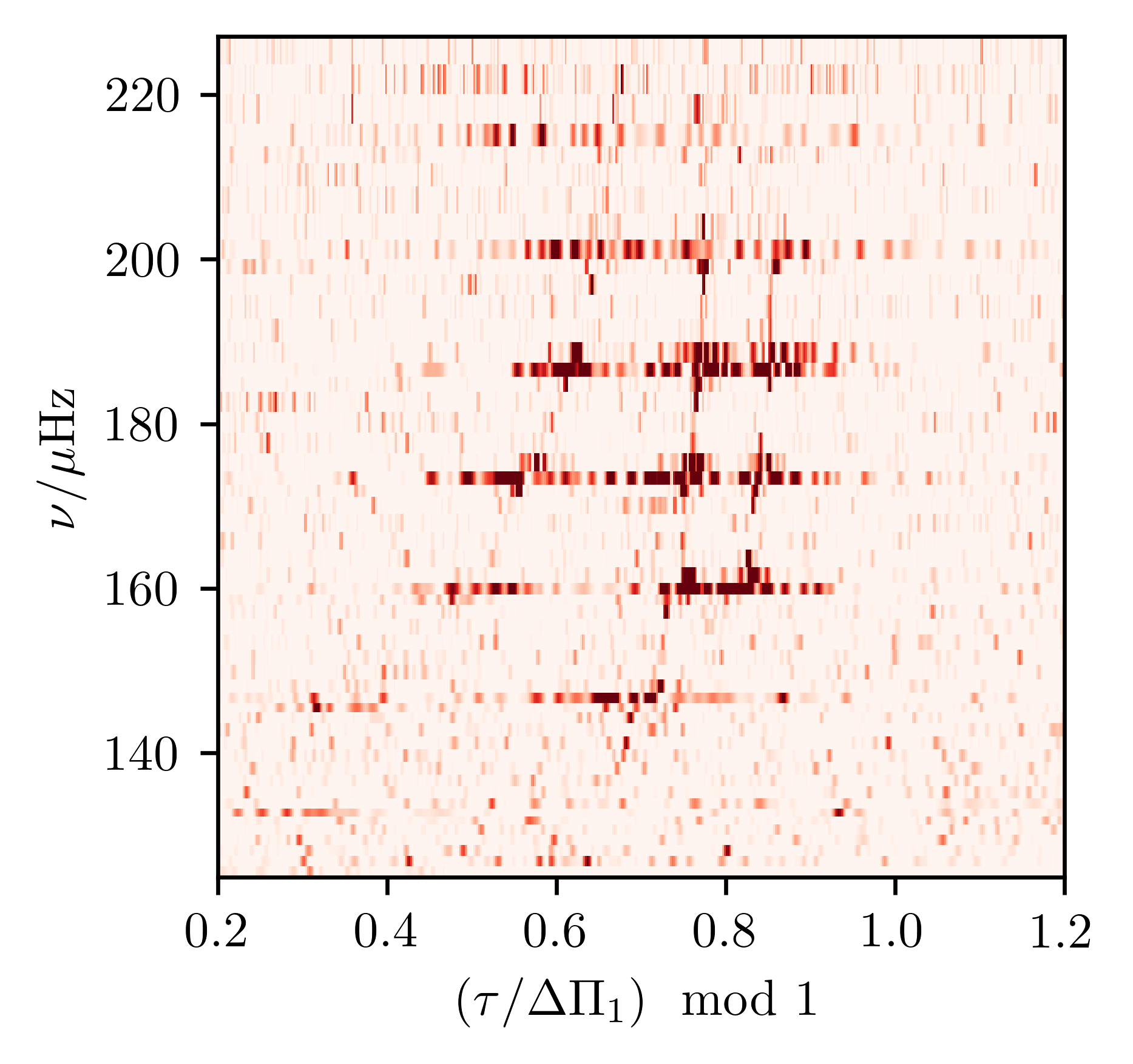
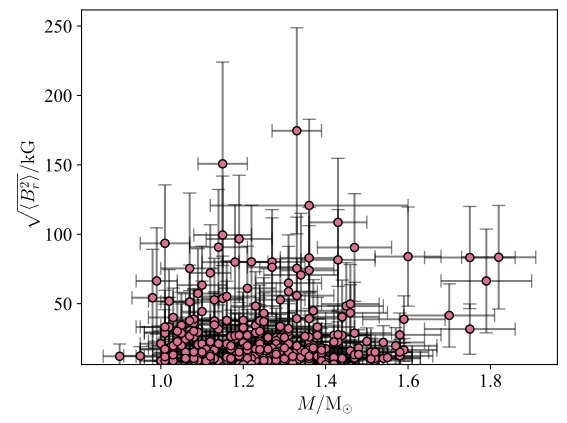
\[\scriptsize \delta \nu_{\text{mag}, g, \ell=1} \sim {m^2 \over \nu^3}\]
†: mentoree paper
Frequency/\(\mu\mathrm{Hz}\)
g-mode phase
RMS Radial Magnetic Field Strength
Hypothesis
(Unno+ 1989)
Data Set
(Kepler: 2013)
Analysis
(Li et al. 2022)
Interpretation
(Rui, Ong, Mathis 2024;
Hatt, Ong, et al. 2024)
Star-Planet Interactions
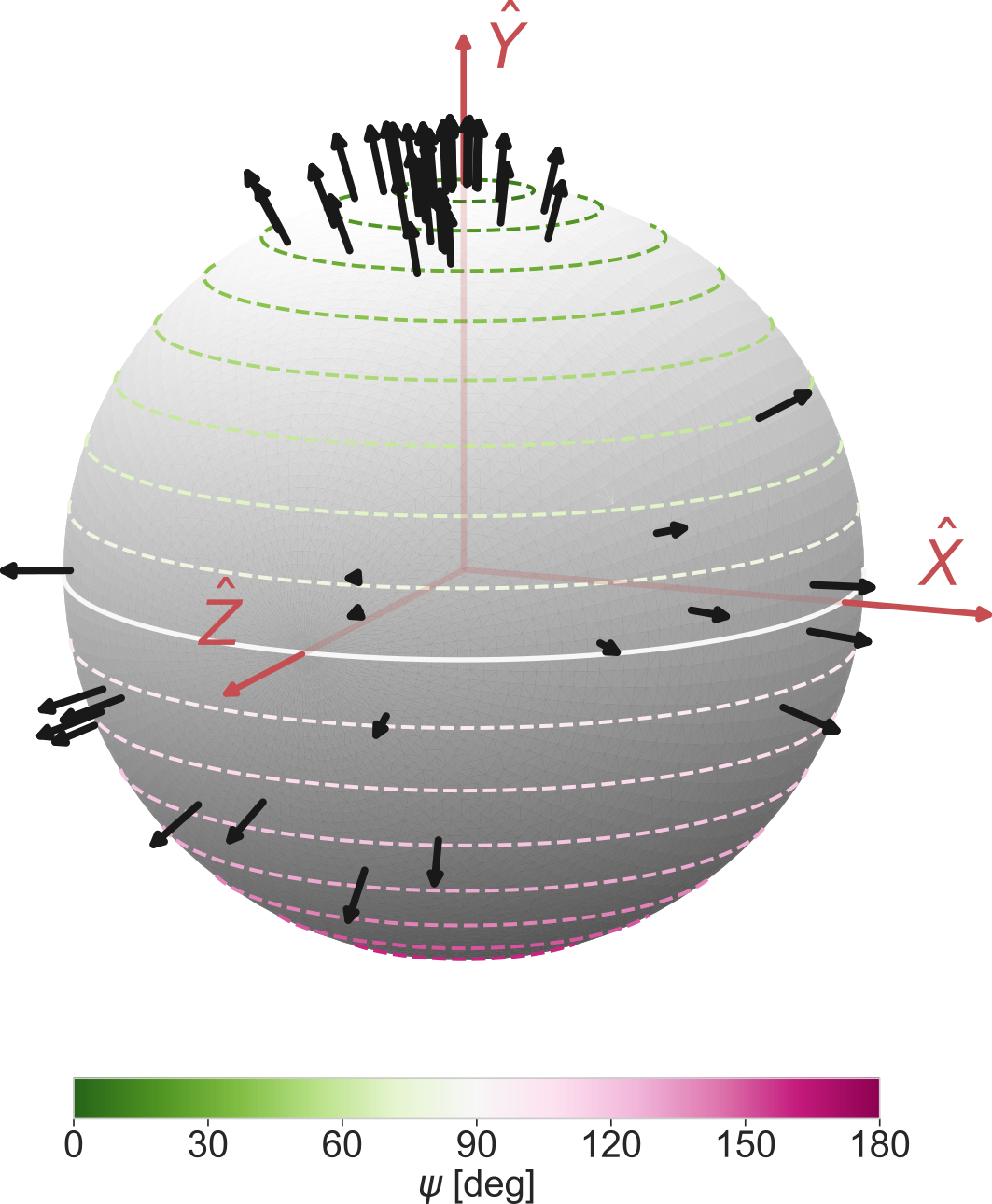
- Stars tend to have (and interact with) companions: binaries, planetary systems, engulfments…
- Seismic rotational measurements indicate anomalies?
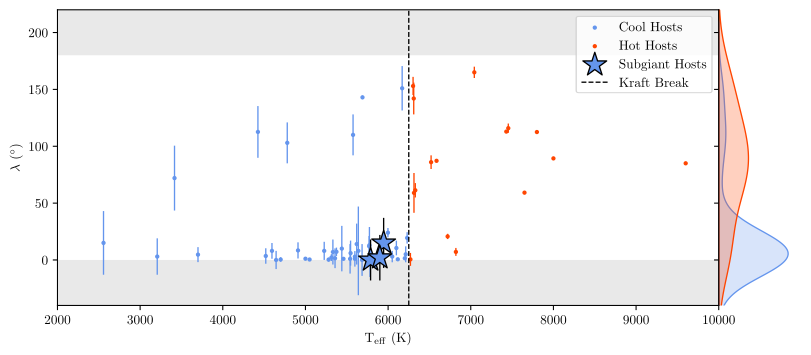
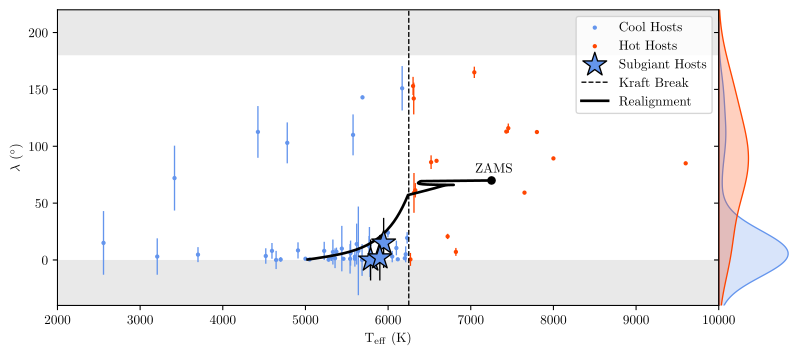
 Saunders et
al. 2024
Saunders et
al. 2024
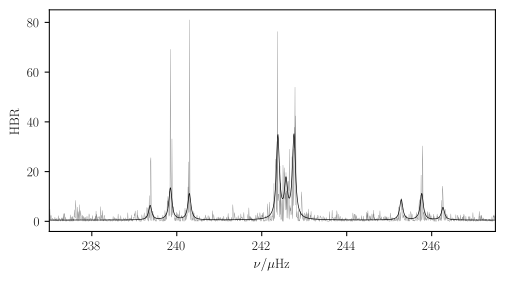
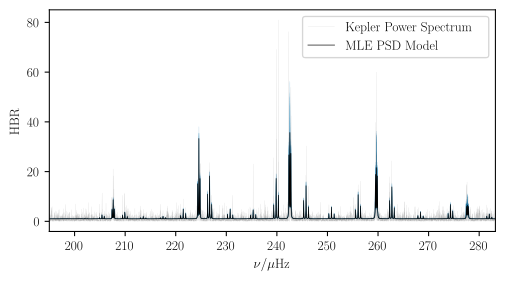

Ong 2025
Existing Data,
New Techniques
(Ong 2025)
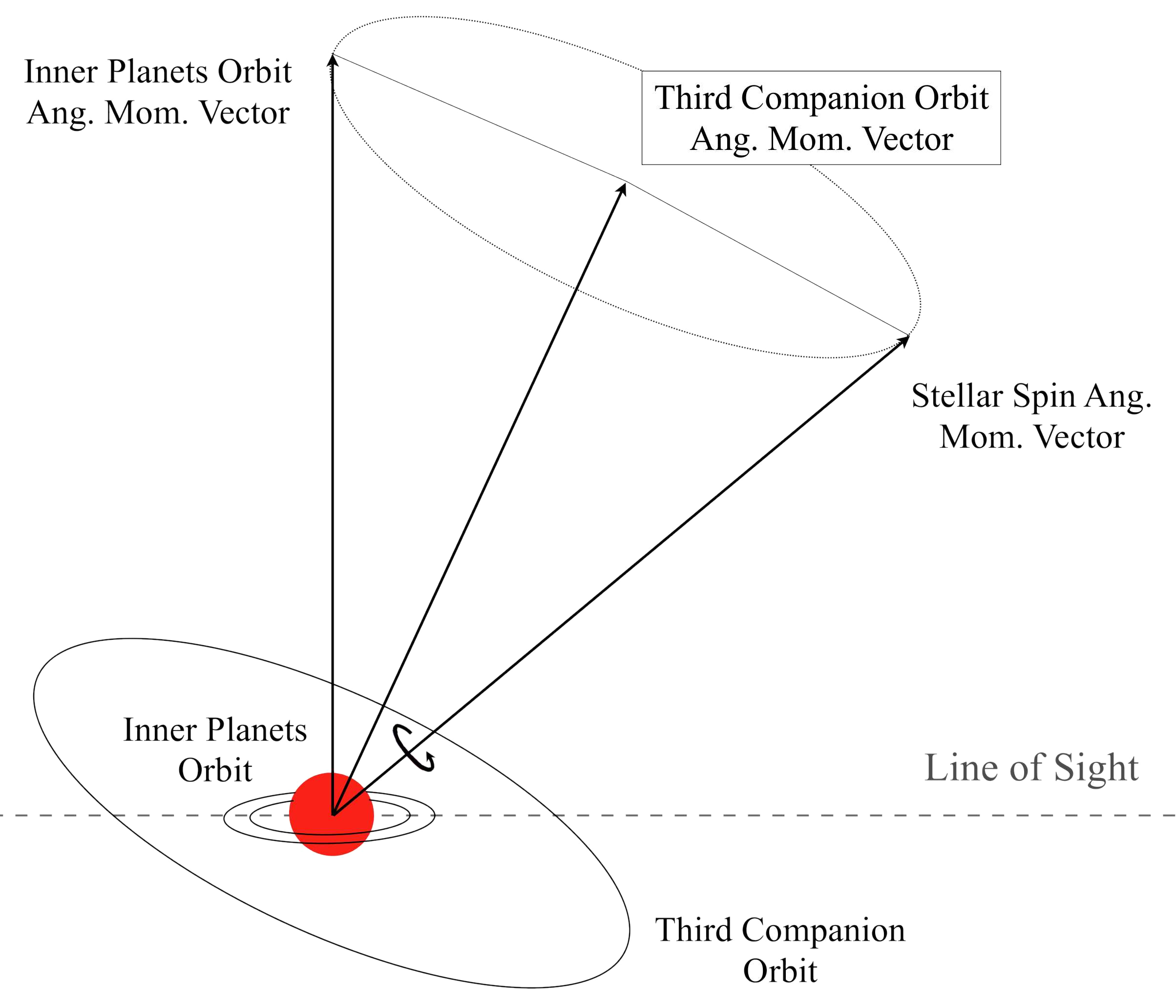
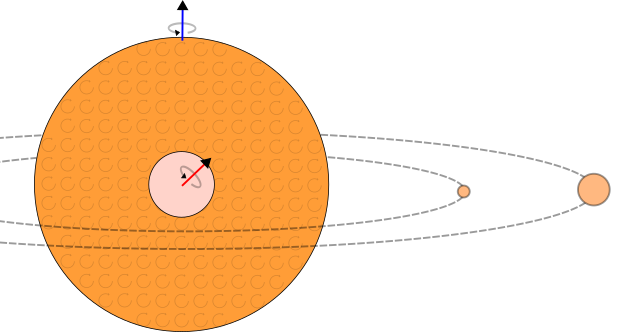
From Huber et al. 2013
Ong 2025
Technique-driven Scientific Discovery!
Hypothesis
(Winn+ 2010)
Data Set
(Kepler: 2013)
Analysis and Interpretation
(Ong 2025)
Unknown Unknowns
In the data-rich régime,
technique development and
interpretation are
rate-limiting steps to discovery.
Data: The PLATO Mission
\(\sim100 \to 10,000++\) stars:
How do we cope with
a deluge of new data?
e.g. Nielsen, Ong, et al., 2025;
Ong et al. 2024b
(incl. Ong: Cunha+ 2021; Nielsen+ 2021, 2023; Campante+ 2023)
How do we search for
and interpret
unknown unknowns?
PLATO DP3: Mode Frequencies
?
Data: PLATO and Inversions
Qualitative new capability:
Ensemble Inversions for Structure and Rotation
(Ong, Hoogendam†, et
al. in prep. — TASC Poster I)
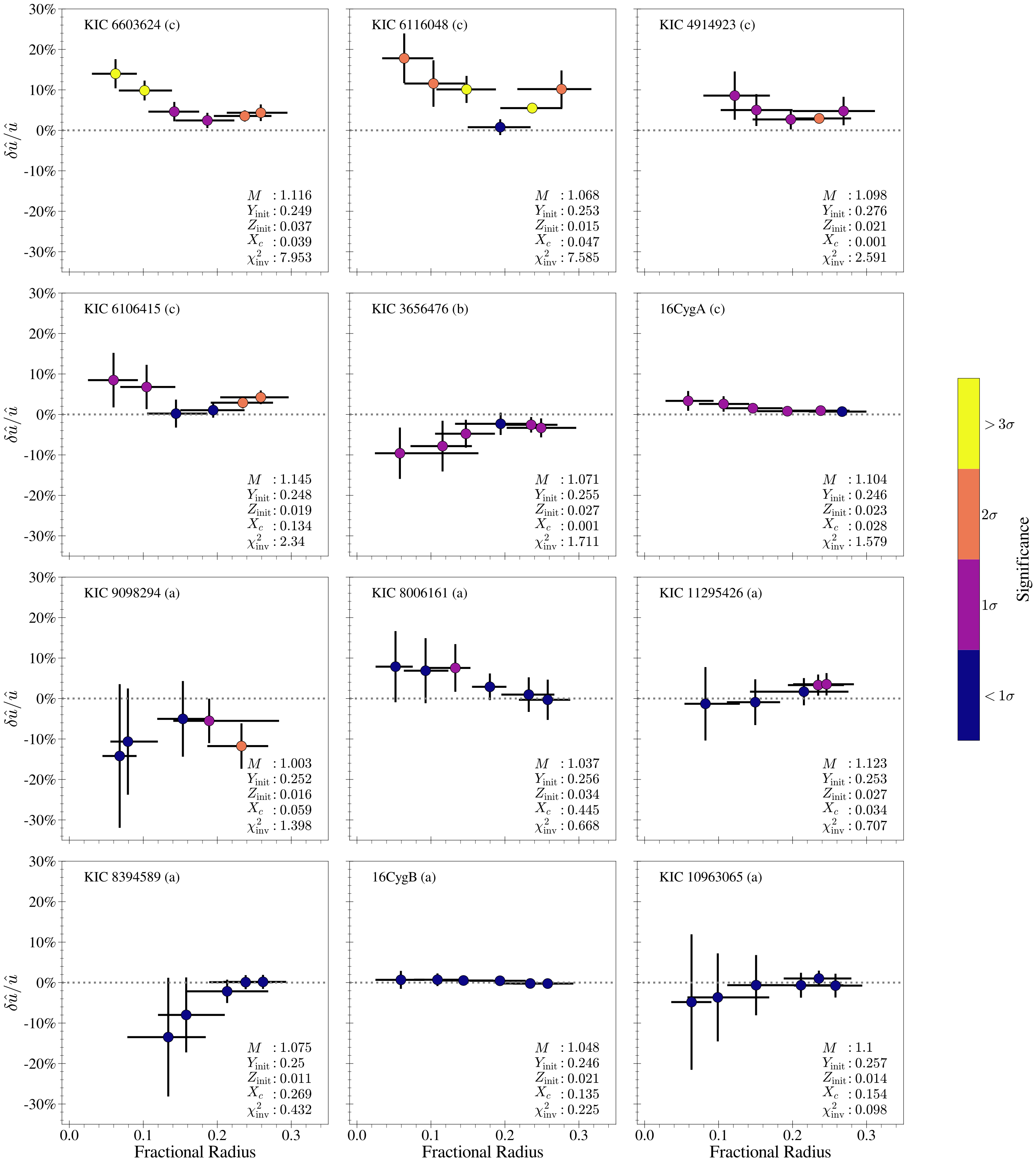
Bellinger+ 2019
Buchele+ 2024
PLATO will bring us from tens to thousands.
?
PLATO DP3,4,5;
Complementary Science
Rotational Inversions Core-Envelope Misalignment RRRGs
Asteroseismic Age-Dating
Constraints on CBM from p-modes The Asteroseismic Surface Term
EPRV
Asteroseismology Asteroseismology
+ Doppler Imaging
Binary Asteroseismology
Constraints on CBM from g-modes
Generalised Structure Inversions
Galactic Archaeology w/ LFEMI
Internal Mixing and Transport Processes (w/ S. Mathis)
Stellar Rotation and Magnetism (w/ R. Garcia; A. Strugarek)
Star-Planet Interactions (w/ A. Garcia; E. Ducrot; B. Perri)
Non-canonical Evolution
Accurate Stellar Ages
?
Data: Synergies on the ground
Combining with Photometric surveys —
e.g. Ong et al. (2024a); Hart+
incl. Ong (2023) 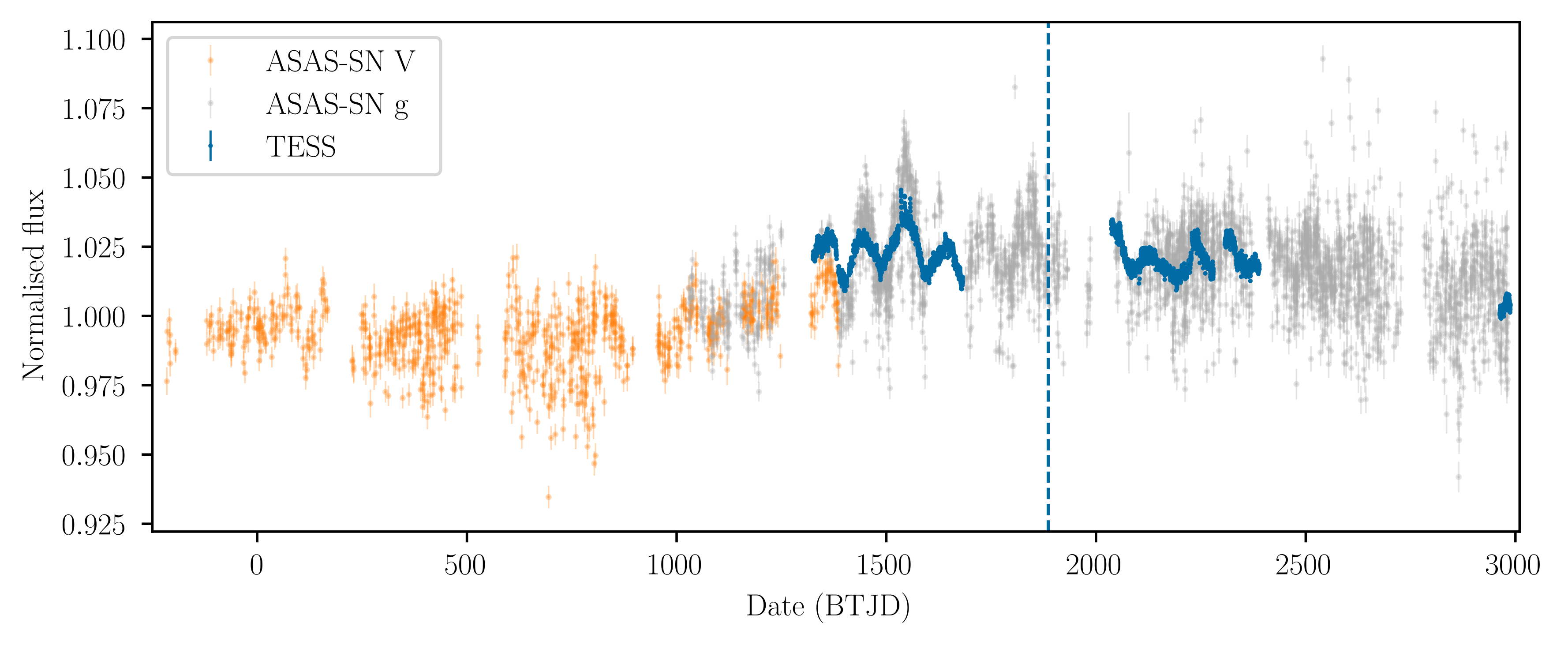
Seismology from Extreme Precision Radial Velocities
(Li, Huber, Ong, et al. 2025; Hon+ incl. Ong 2024) 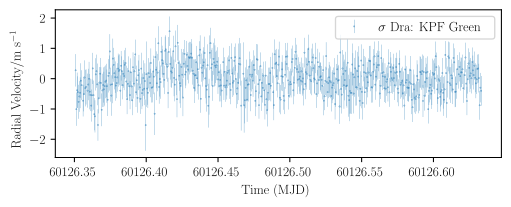
Ong: ASAS-SN; SONG WG1 & WG2; Keck Planet Finder via CPS
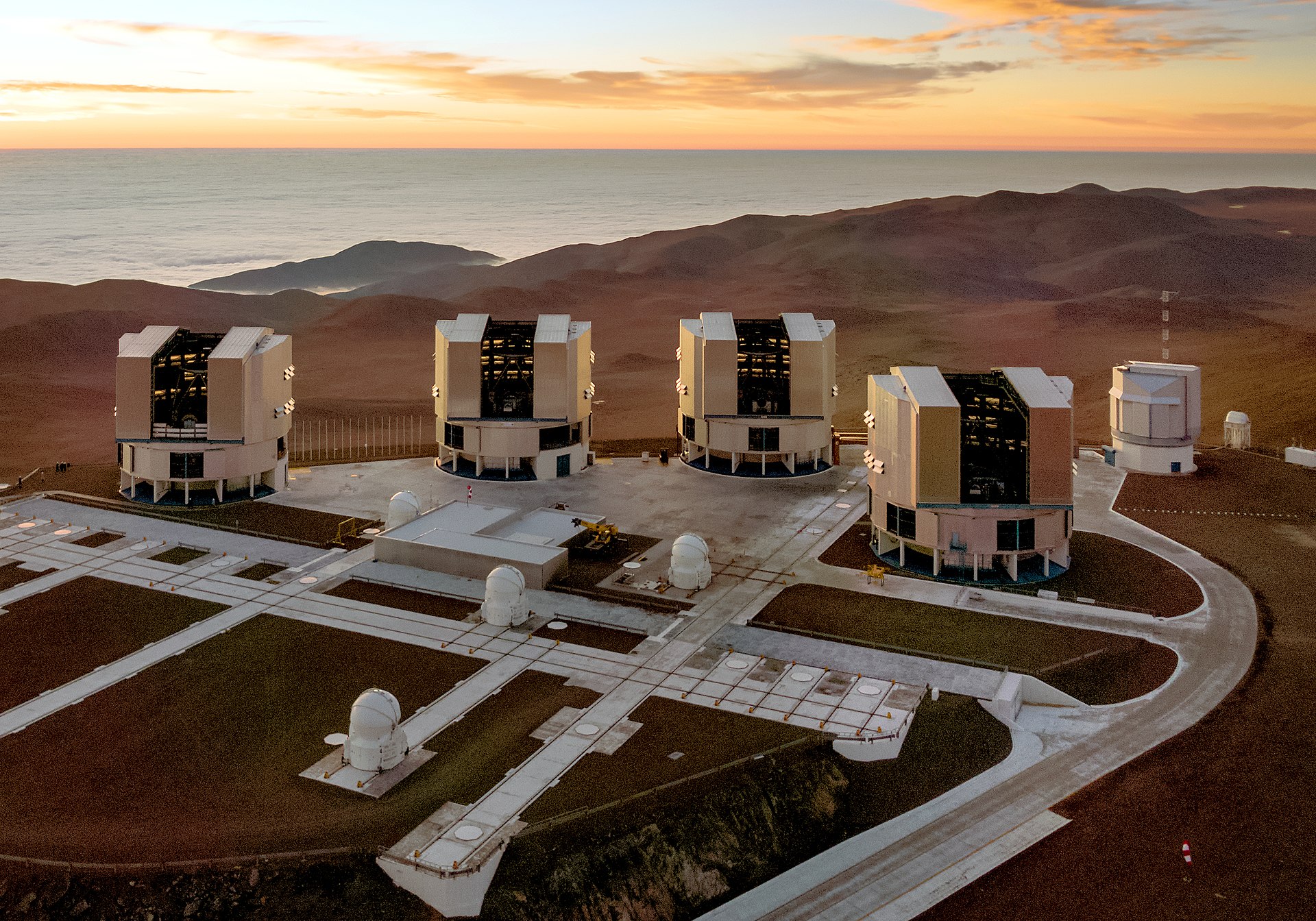
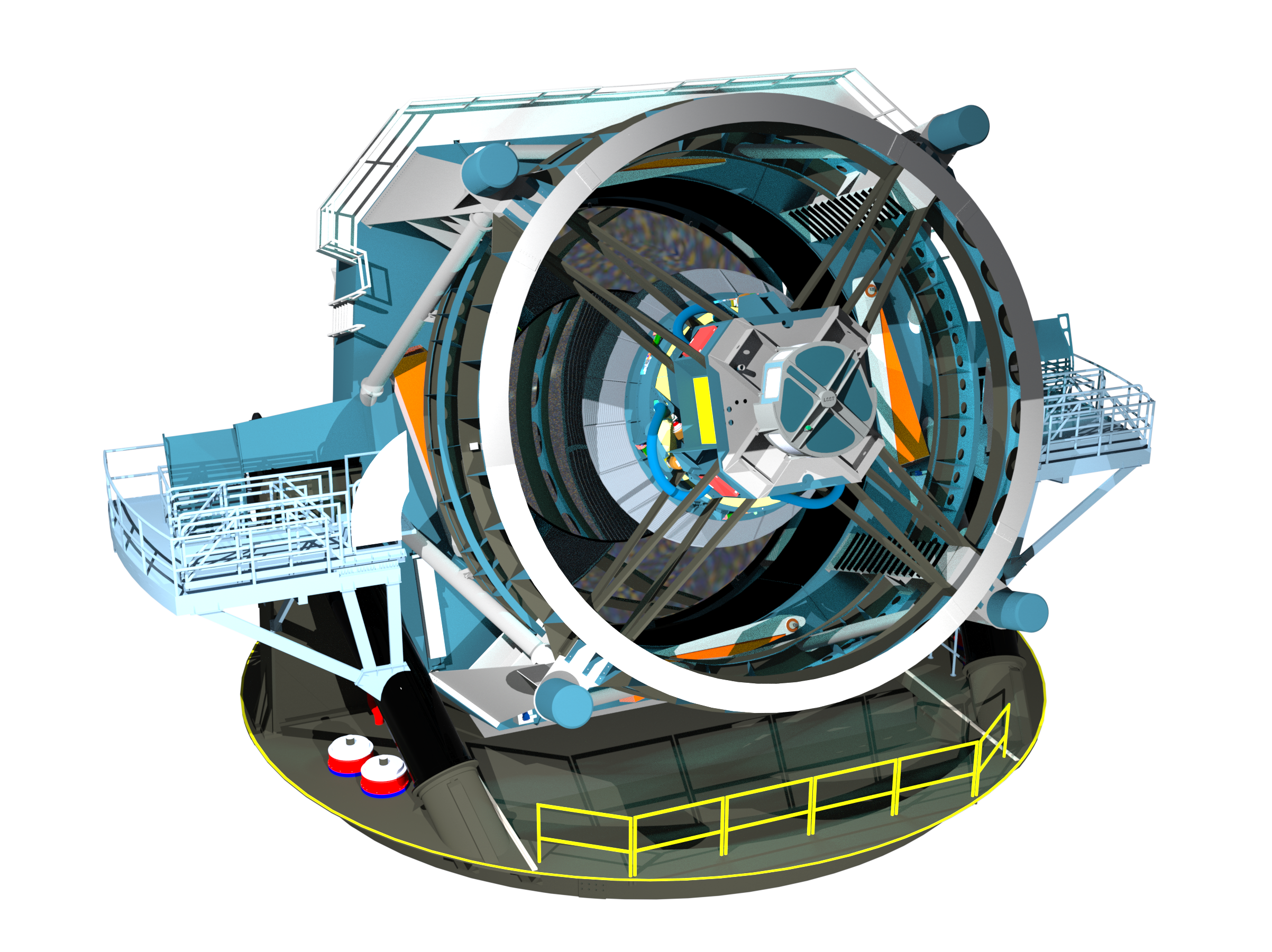
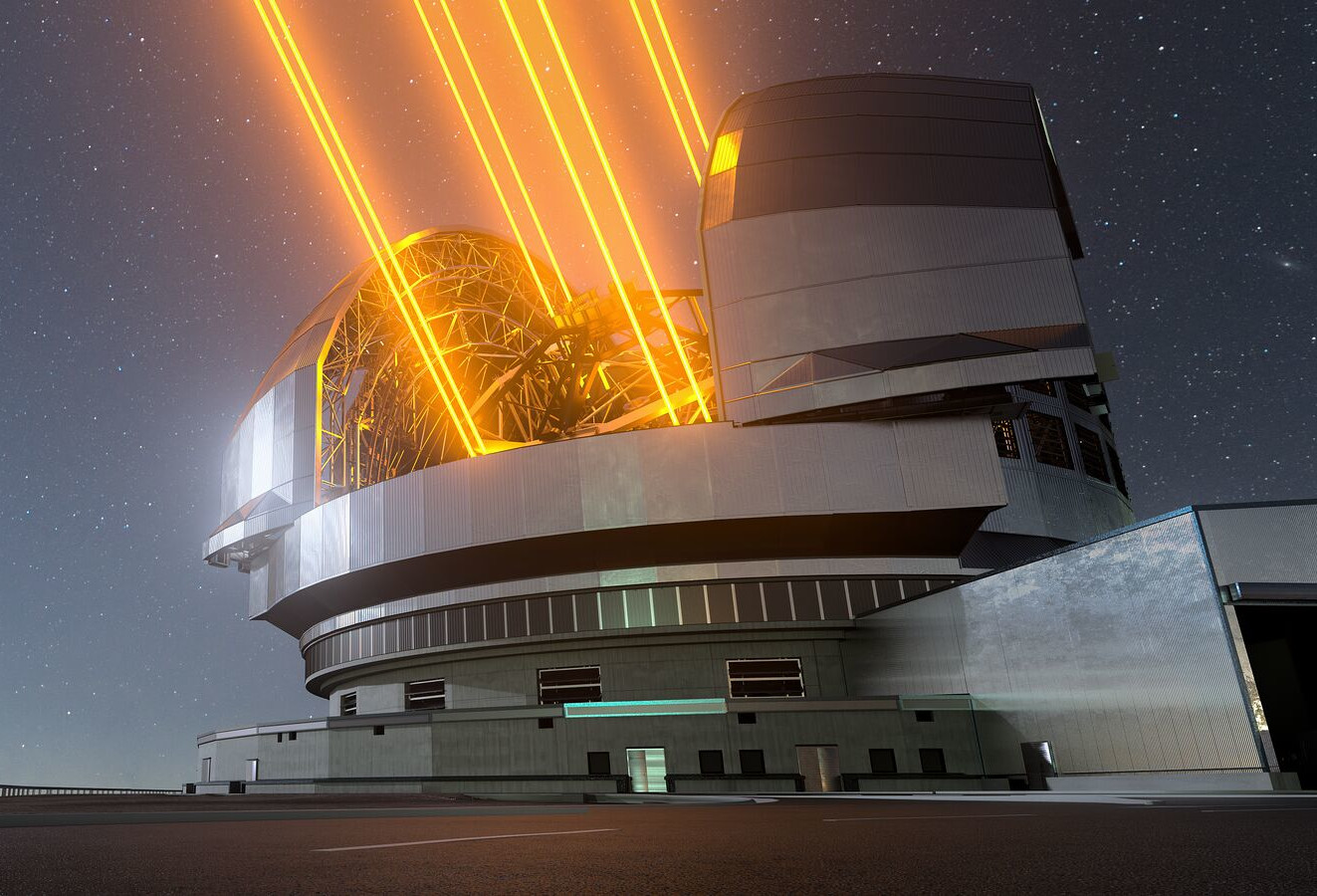
Cool Dwarfs
with ESPRESSO
Long-Period Variables
with Rubin/LSST
EPRV Asteroseismology
with the E-ELT
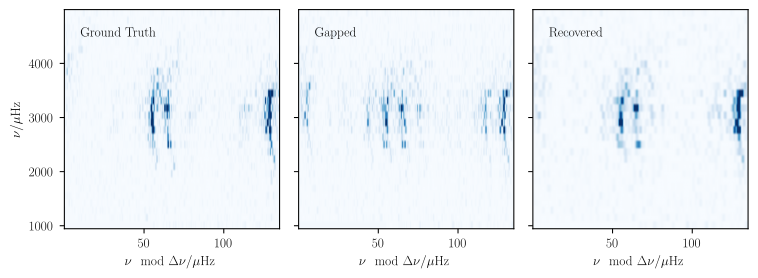
Data-processing techniques for gapped data sets: Ong, Li, Hey (in prep. — TASC Poster II)
?
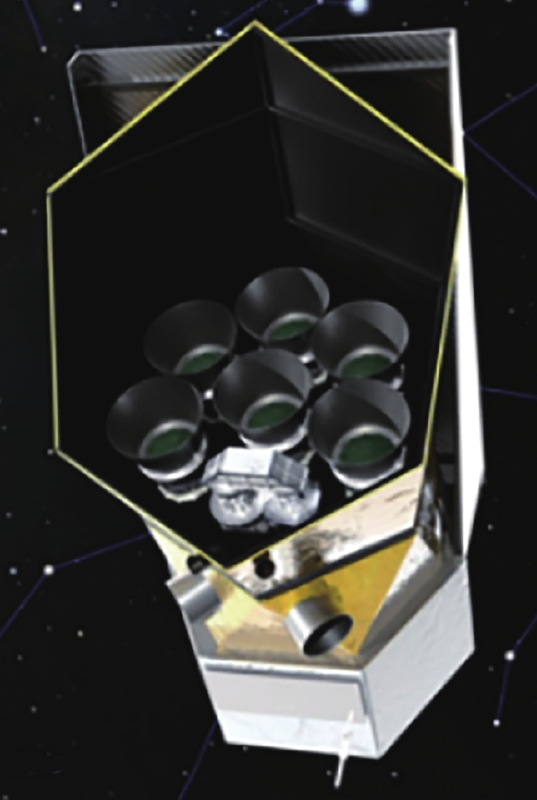
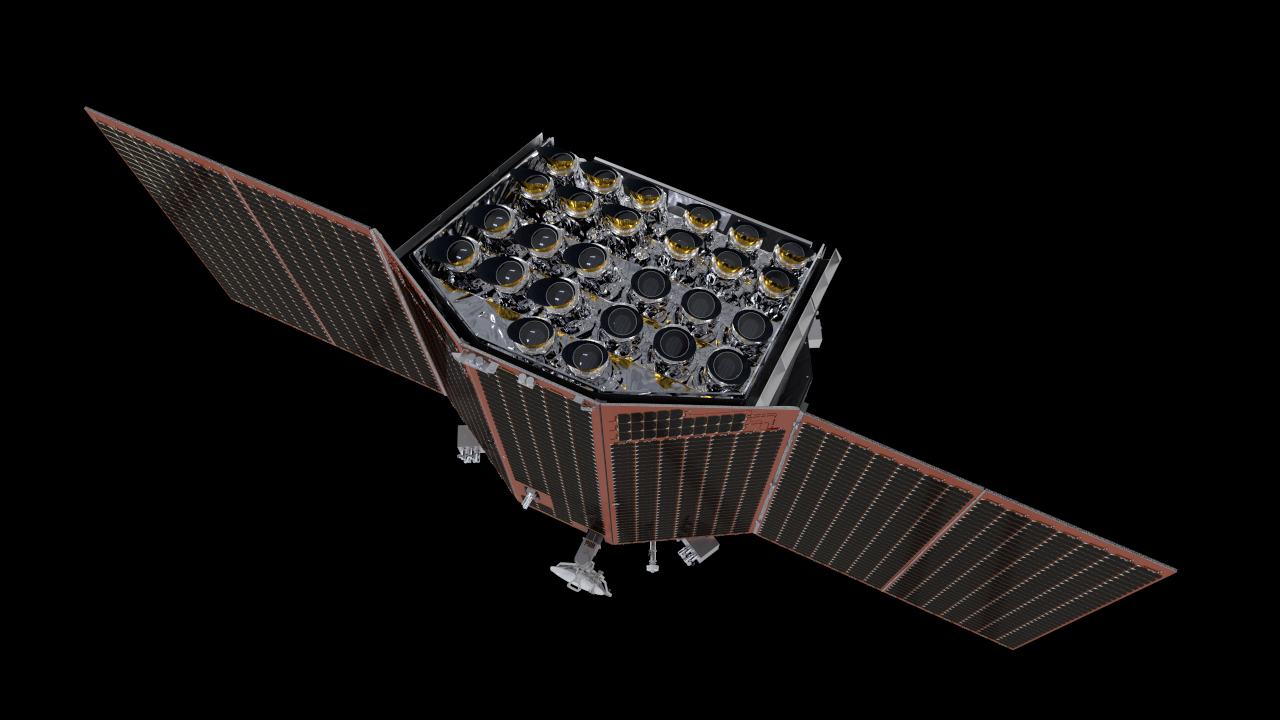
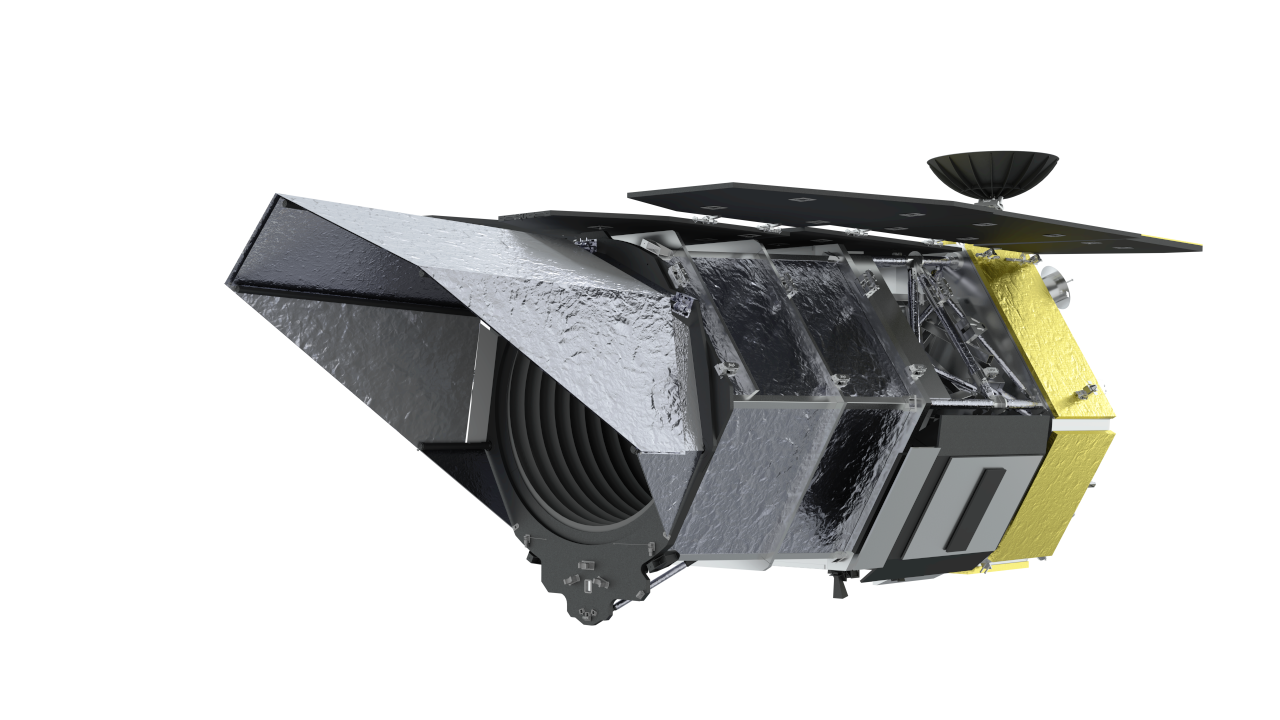
Statistical sample (Ong: WP 120, 128; CS WP 162)
\(\sim 10^6\) red giants in galactic bulge & globular clusters
Long temporal baselines
(Ong: collaboration member)
All-sky shallow search
(Ong: TASOC WG1, WG2, WG7)
Telescopes can only point at one star at time…
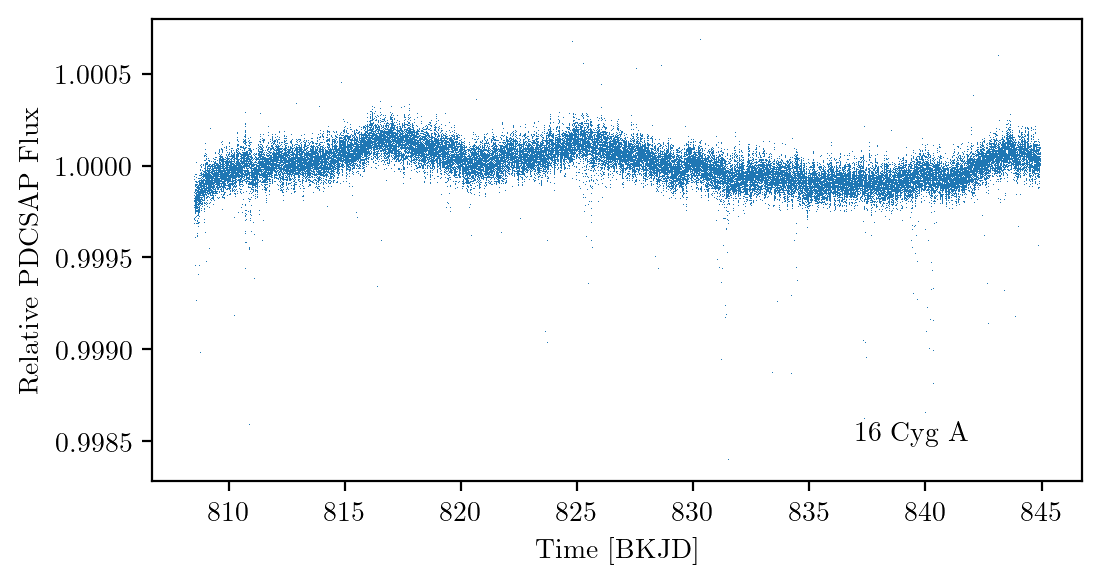
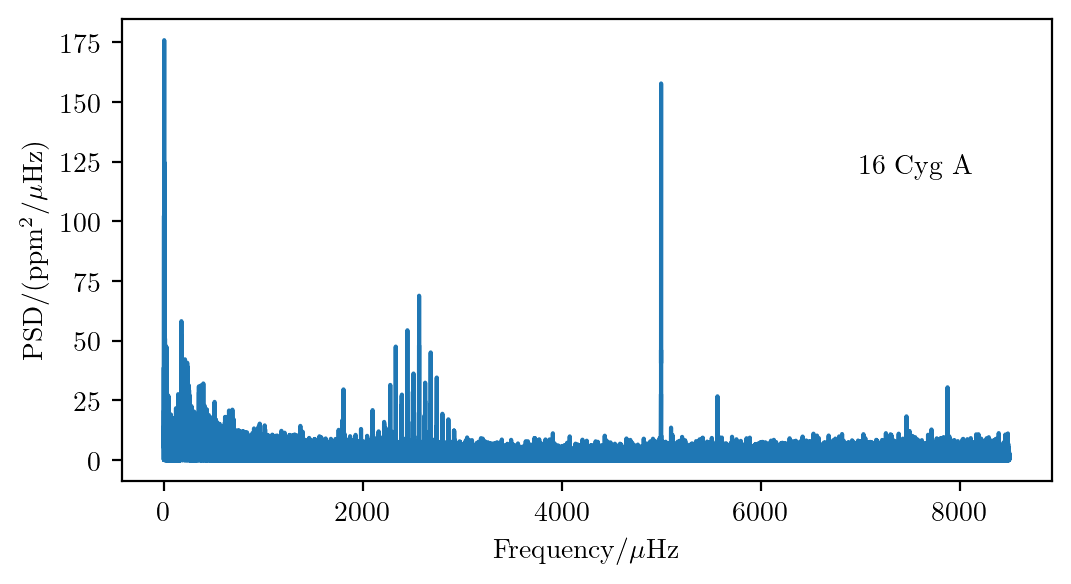
Required photometric stability not achievable from ground
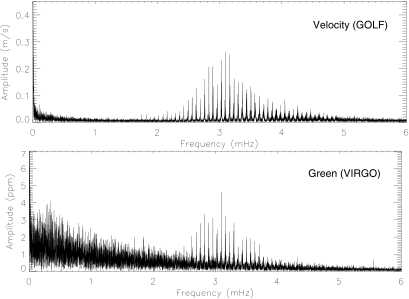
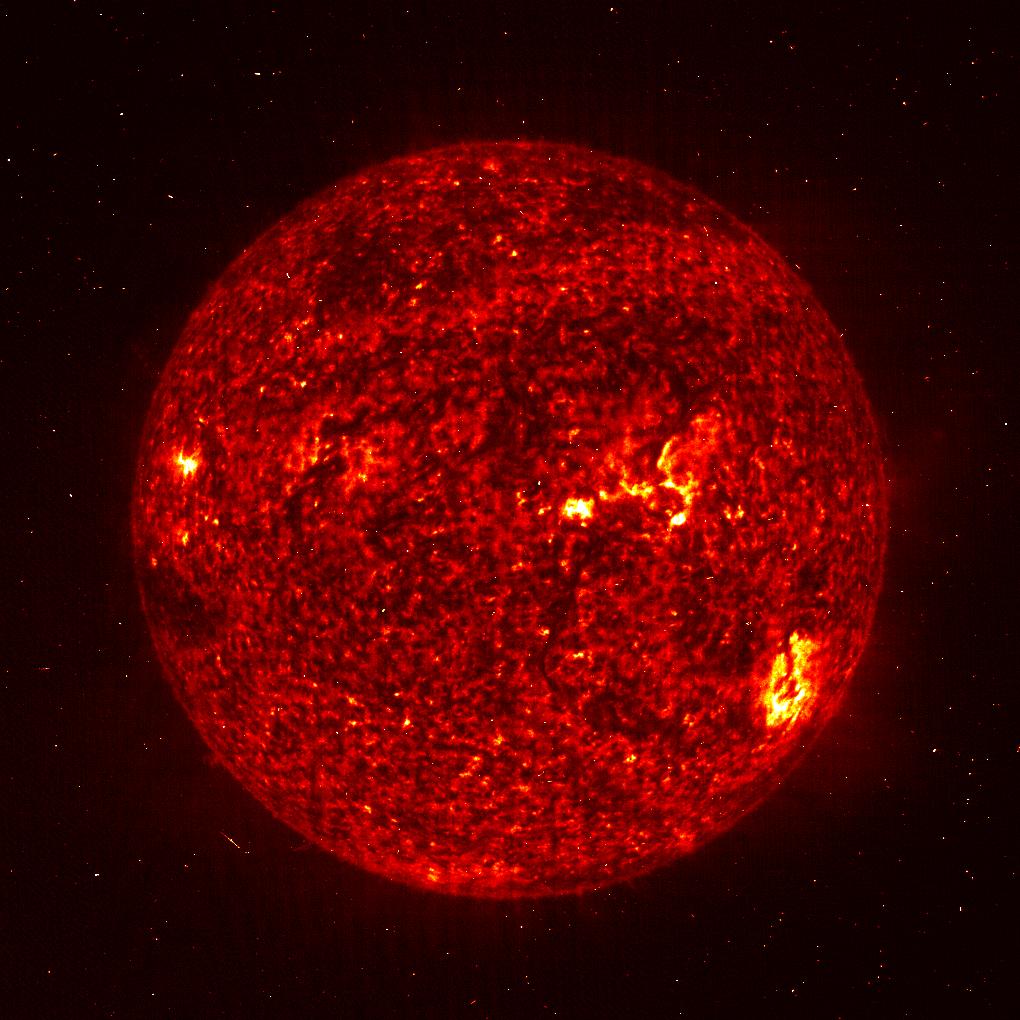
The Sun as seen by SOHO:
Bedding & Kjeldsen 2005
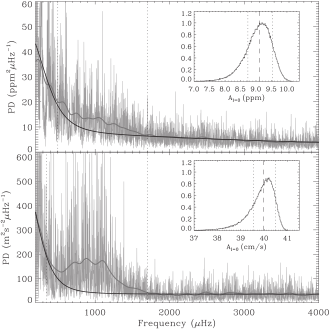
Procyon from MOST vs. RVs:
Huber et al. 2011
Probing the star-planet connection, and non-canonical evolution
e.g. Ong 2025;
Ong et al. 2024a;
Hon et al. (incl Ong) Nat. 2023
(also incl. Ong: Huber+ 2019, 2022; …)
Kepler-56’s core and envelope
rotate around different axes.
(Ong 2025)
Zvrk rotates too fast to
not have eaten something recently.
(Ong et al. 2024a)
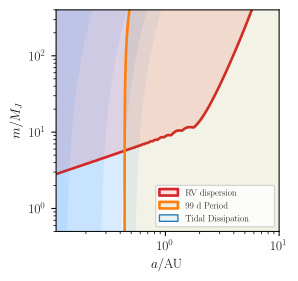
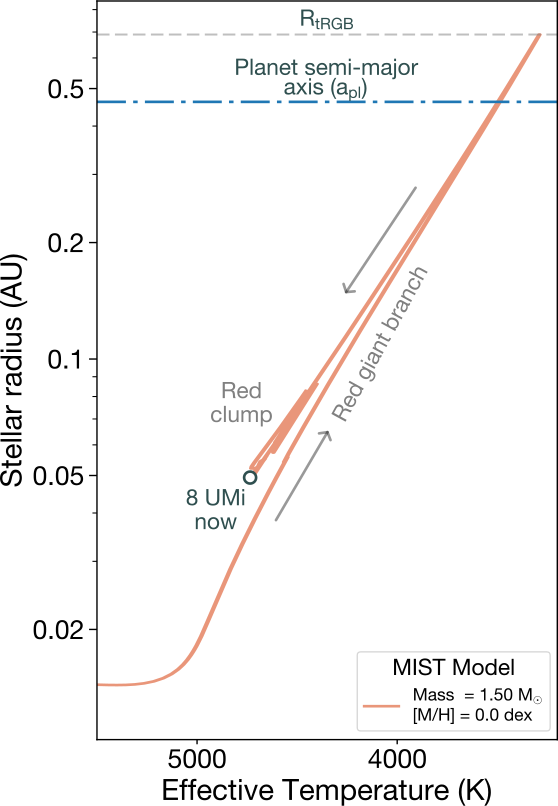
8 UMi b should have
been consumed, but wasn’t?
(Hon+ 2023 incl. Ong)
PLATO DP4: Rotation and Activity
?
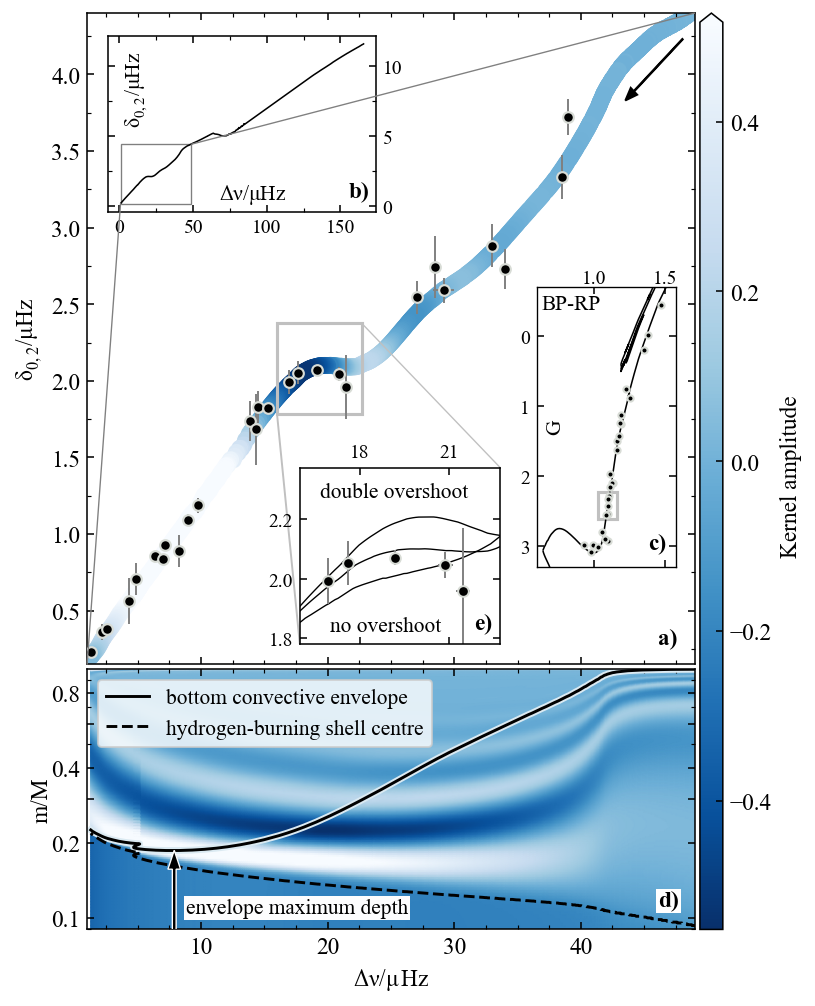
Probes of mixing processes
near convective boundaries
(Lindsay, Ong, Basu 2022†, and
2024†;
Ong, Lindsay, Reyes et al. 2025;
Reyes, Stello, Ong, et al. 2025†, Nature)
†: mentoree paper
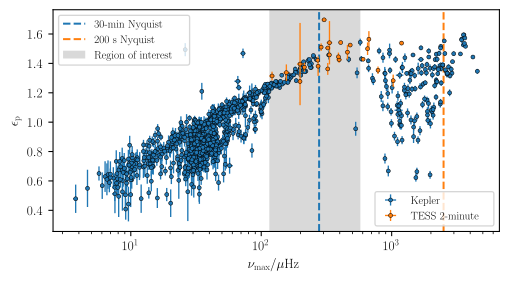
Ong: TESS Guest Investigator Cycle 7, PI
?
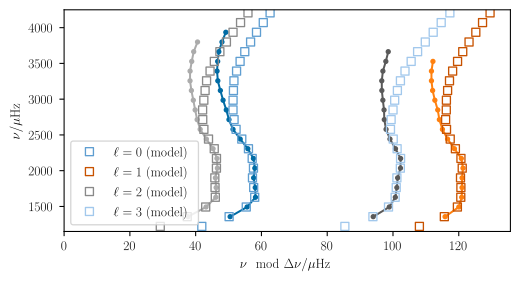
Theory: The Surface Term
?
Theory: Analytical Methods for g-modes
Nonlinear evolution is
the primary obstacle to
g-mode inversions.
Will understanding
this
(Ong, Hoogendam†, et al. in prep.) permit
further technique development?

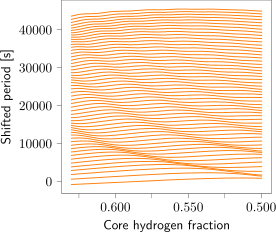
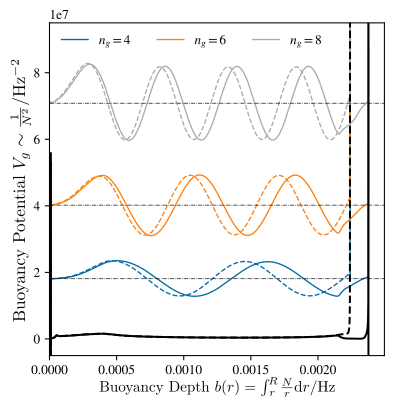
proxy for age \(\to\)
†: mentoree paper
?
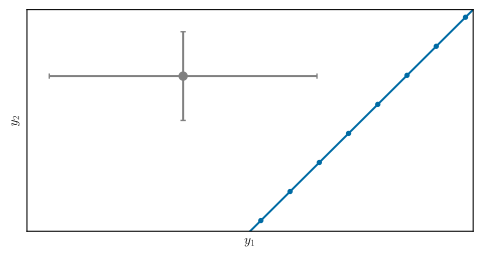
Data: \(y_\text{obs} \in Y\)
Models: \(x_i \in X\);\[F: X \to Y\]
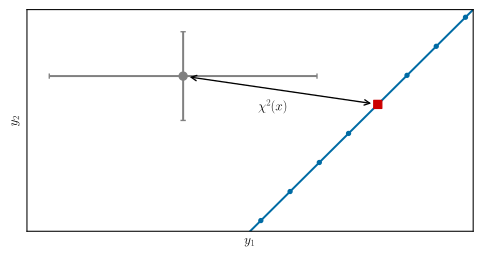
Best-fitting model: \[x = \mathop{\mathrm{argmax}}_{x_j \in X}\ \mathcal{L}\left(x_j\right)\]
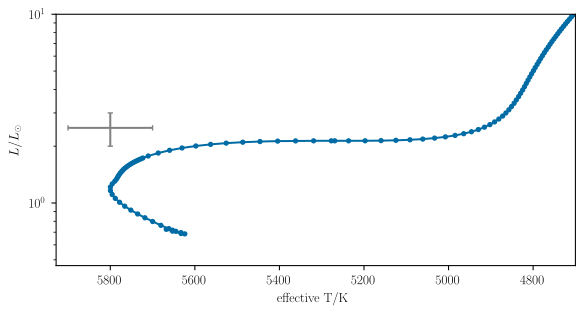
\[F: \underbrace{\left(M, t, Y_0, Z_0, \alpha_\text{mlt}, \ldots\right)}_{x \in X} \mapsto \underbrace{\left(L, T_\text{eff}, [\text{M/H}], \log g, \ldots\right)}_{y \in Y}\]
\[F: \underbrace{\left(M, t, Y_0, Z_0, \alpha_\text{mlt}, \textbf{input physics}\right)}_{x \in X} \mapsto \underbrace{\left(L, T_\text{eff}, [\text{M/H}], \log g, \ldots\right)}_{y \in Y}\]
\[ \color{darkorange} \to \Delta\nu, \nu_{\text{max}}, \left\{\nu_{n,l}\right\} \]
PLATO DP5: Masses, Radii, Ages
?